
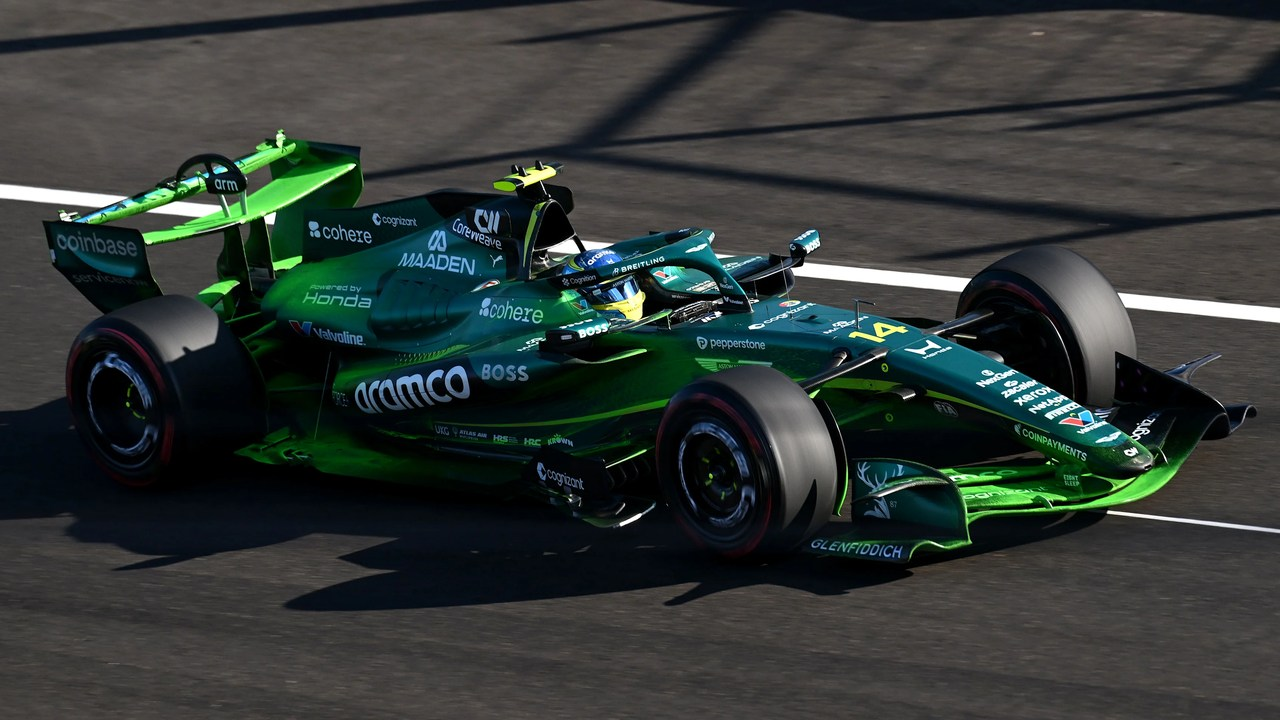
Aston Martin brought 16 changes to the AMR26 for the Hungarian Grand Prix. Fernando Alonso tested the new package during Friday practice.
The changes cover the nose, front wing, floor, sidepods and rear suspension. Each part supports a wider change in airflow beneath the car.
The package changes the complete airflow path
The package is larger than a normal circuit-specific adjustment. Aston Martin changed connected surfaces from the front wing to the diffuser.
The exposed floor edge now runs across a larger area. That edge guides more air towards the space beside the rear tyre.
The flow then reaches the diffuser at the back of the floor. A stronger supply helps the diffuser work across a wider ride-height range.
This matters when the rear of the car rises during a lap. Aston Martin wants stable floor performance in several different corner types.
The Hungaroring provides slow turns, long corners and repeated changes of direction. Friday practice therefore offered several useful tests for the new surfaces.
Green flow-visualisation paint covered parts of Alonso’s car during those runs. The paint showed engineers where air travelled across the revised bodywork.
A slimmer nose changes the front wing flow
The AMR26 now carries a narrower nose with a reshaped lower surface. That design sends more air between the nose and front wheels.
The front wing elements also carry a different profile across their width. A revised endplate fence now curves further towards the inside.
Its upper vane sits farther forward and points more sharply downward. These shapes alter the pressure around each rotating front tyre.
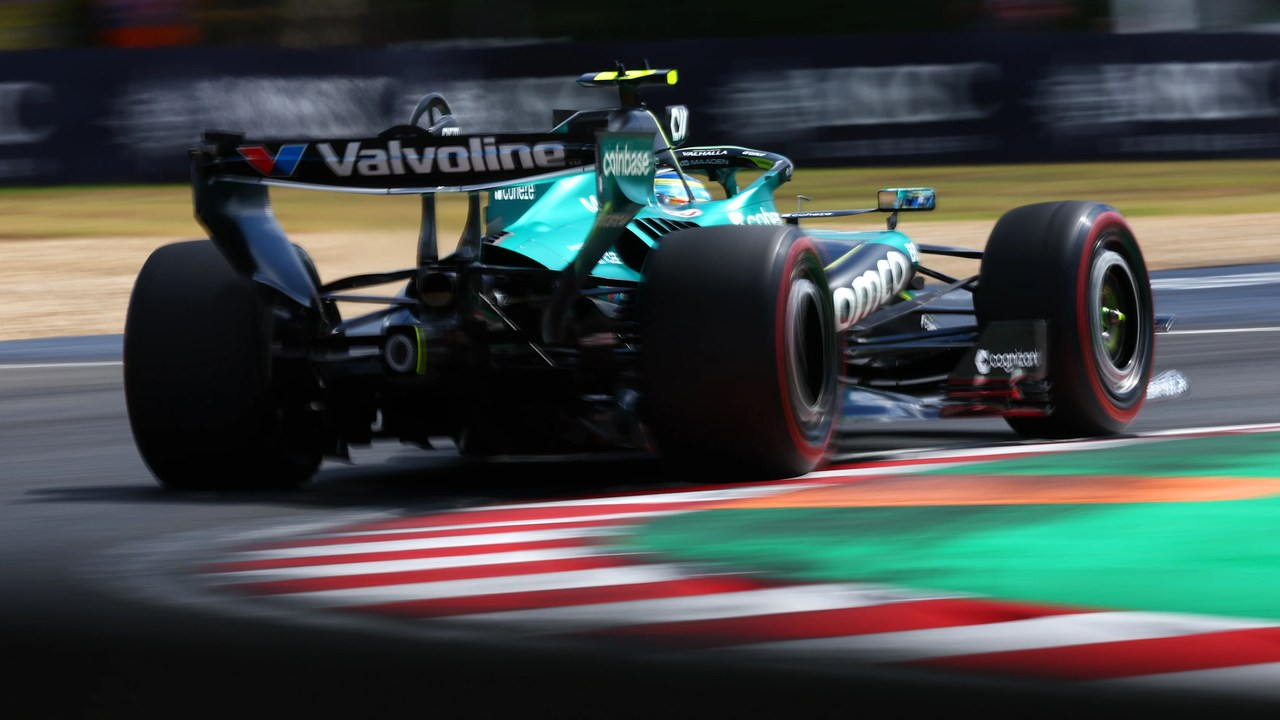
The lowest wing element also rises higher near the endplate. That creates more space for air beneath the outer wing section.
More of this air can travel inside the front wheel. Part of that flow moves directly towards the centre of the floor.
Another part follows the larger exposed edge beneath the sidepod. The front changes therefore prepare the air before it reaches the floor.
New floor boards use a simpler shape
Aston Martin also redesigned the boards behind the front wheels. These parts manage disturbed air created by the rotating tyres.
The main board now sits lower than the previous version. Its horizontal elements have moved farther towards the rear.
Several small guide vanes behind the old board have disappeared. The simpler layout suggests stronger airflow already reaches this area.
| Team | Aston Martin |
|---|---|
| Car | AMR26 |
| Package | 16 updated areas |
| First track test | Hungarian Grand Prix practice |
Less guidance is required before the air enters the floor. The boards can instead support the flow arriving beneath the nose.
Both streams meet around the front of the revised floor. The larger floor edge then carries air towards the rear wheel.
This route supports the low-pressure area beneath the sidepod. It also links the front-wing work with the diffuser changes.
The sidepods create a larger lower channel
The sidepod inlet still sits beneath a wide upper body section. However, the cover above the radiator opening is now wider.
Its angle is also less steep than before Hungary. The sidepod itself has become slimmer through its vertical profile.
That change increases the open channel beneath the main bodywork. The upper surface stays wide for longer towards the rear.
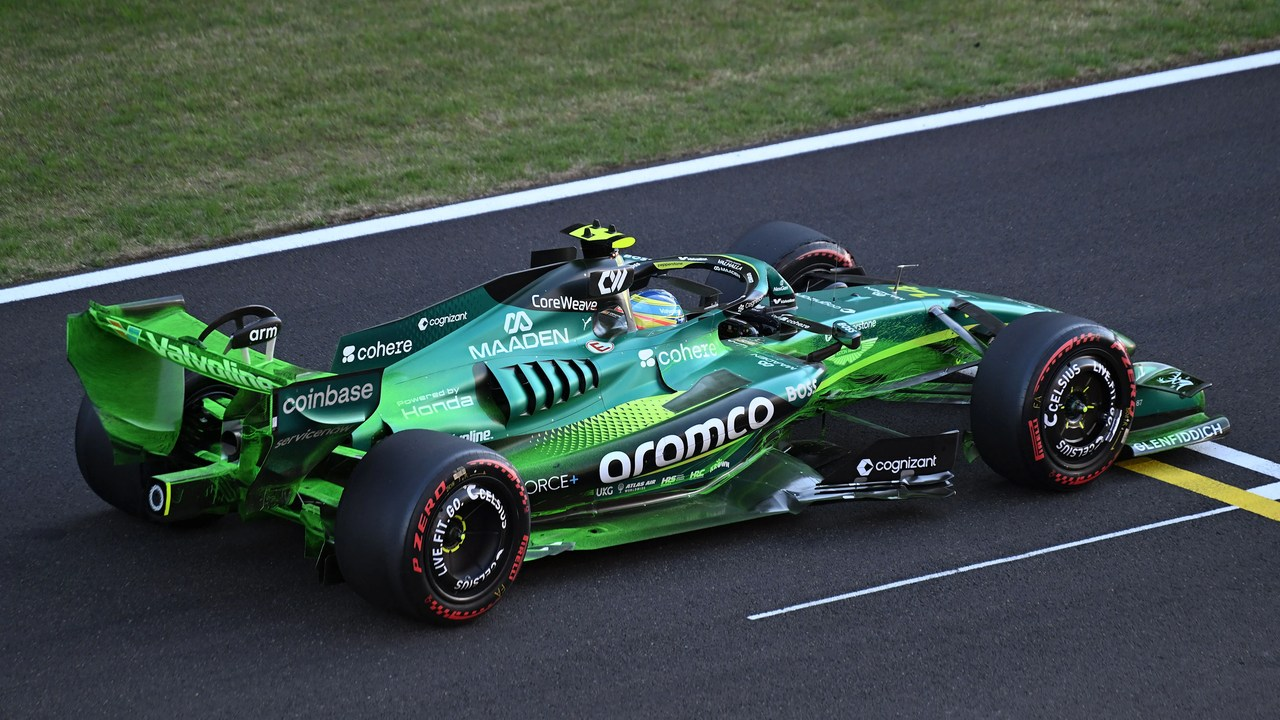
This combination creates a larger low-pressure area below the sidepod. Air moves faster through that space and along the floor edge.
The flow then turns inward before reaching the rear tyre. That movement feeds the narrow gap beside the diffuser wall.
Aston Martin also changed rear suspension arms and their outer covers. Those parts now sit within the same revised airflow path.
Friday practice provides the first data from Aston Martin’s upgrades
Alonso completed visible evaluation work during the opening practice sessions. The flow paint provided a direct check against wind-tunnel predictions.
Engineers could compare clean areas and painted areas after each run. They also studied tyre behaviour while the circuit gained grip.
The package is designed around a higher rear ride height. That position produces a steeper angle between the floor and track.
Designer Adrian Newey has used that approach on earlier cars. The new parts make the idea more workable under the current rules.
Aston Martin did not present one change as an isolated solution. The nose, wing, floor and sidepods work as one connected system.
Friday running gave the team its first track data from that system. Further changes are planned after the Hungarian package.
The Budapest work established a reference for those later developments. It also showed how the AMR26 now directs air under the car.
The result is a clear technical update rather than another qualifying report. Both drivers can compare the package through the remaining race sessions. Those sessions include the heavier fuel loads used during the Grand Prix.

No Comments