
Williams has restored an original FW18 three decades after its title season. Chassis four returned to running condition for the Goodwood Festival of Speed. The car had spent many years without track use.
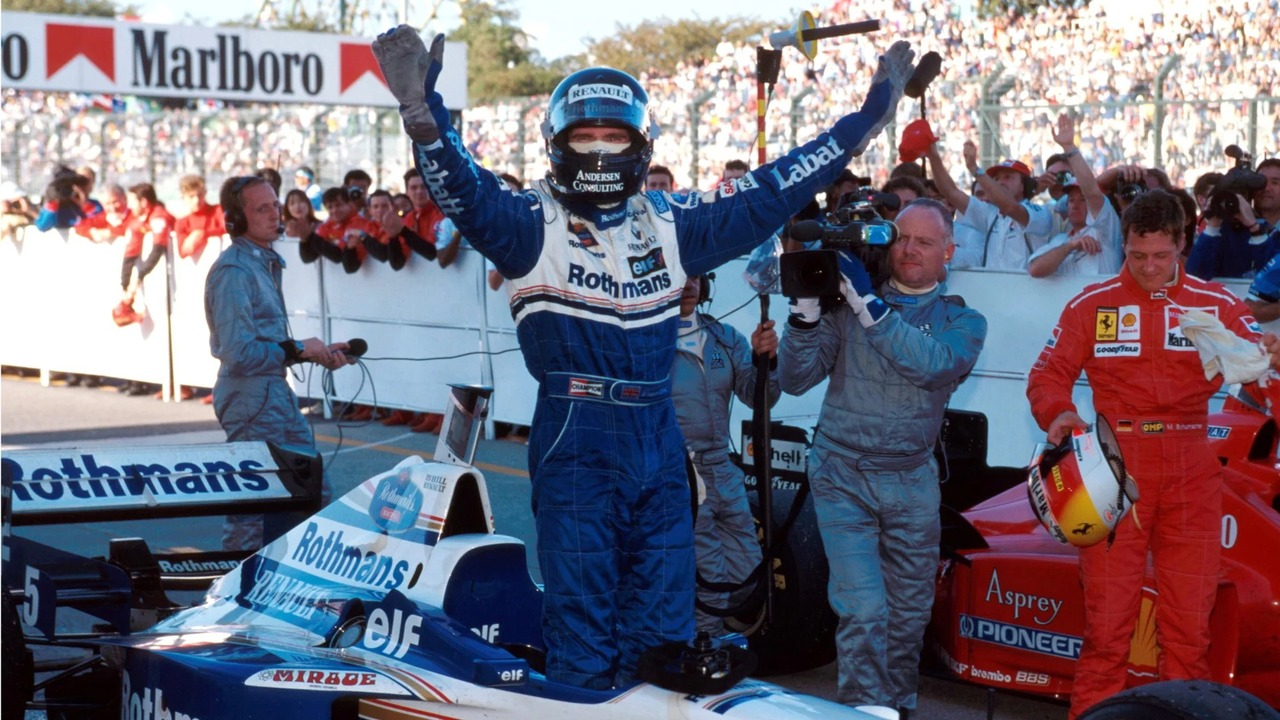
The FW18 won both Formula 1 championships in 1996. Damon Hill secured the drivers’ title ahead of teammate Jacques Villeneuve. Williams also took the constructors’ championship with a dominant record.
The FW18 set the standard in 1996
Williams started from pole at twelve of sixteen Grands Prix. The team also won twelve races and collected twenty-one podium finishes. Those figures made the FW18 the season’s defining car. Hill won the championship at the final race in Japan. Villeneuve remained in contention during his first Formula 1 season. Their results gave Williams a large constructors’ total.
Patrick Head oversaw the technical programme, while Adrian Newey led the aerodynamic design. Renault supplied the car with its successful V10 engine. The package combined speed with strong reliability across different circuits.
| 1996 season statistic | Result |
|---|---|
| Grand Prix victories | 12 from 16 races |
| Pole positions | 12 |
| Podium results | 21 |
| Championship titles | Drivers’ and Constructors’ titles |
Chassis four carried its own race history
The restored car was not built as a display copy. It is an original FW18 chassis used during the championship season. Hill drove it to four Grand Prix victories. Every surviving race car has a separate history. Components change during repairs and later demonstrations. Williams therefore studied records before beginning the restoration.
Chassis identity also affects paint, fittings and mechanical details. The team wanted the finished car to reflect its original competition period.
That required more than starting the old engine.
The restoration began with a bare chassis
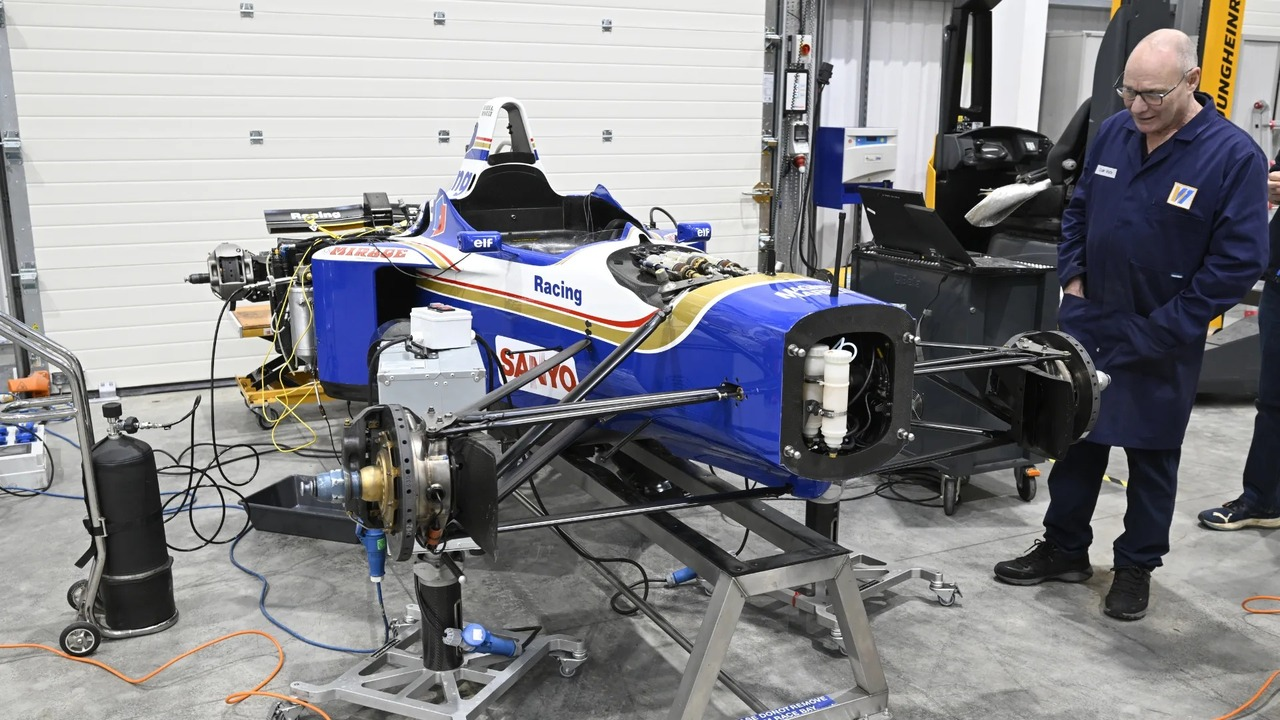
Technicians removed old parts and stripped the car to its central structure. The chassis then received fresh paint in the correct colours. Mechanical systems were inspected before reassembly. Rubber seals, hoses and fluids can deteriorate during storage. Safety depends on replacing unsuitable items without changing the visible character. The engine and gearbox also need careful checks.
The team used workshop knowledge from its heritage programme. Former drawings and setup information supported the work. Modern tools helped inspect parts that were difficult to assess by sight.
Goodwood offered a controlled return
The Festival of Speed uses a short hillclimb rather than a Grand Prix circuit. Historic cars run individually and at lower sustained loads. That setting suits a first public return. Spectators can see and hear the car without a full race programme. Engineers still monitor temperatures, pressures and the driver’s feedback. Any unusual signal can end a run early.
The objective was reliable demonstration, not a lap record. The FW18’s value comes from its original history. Careful running preserves the car for later heritage events.
The project keeps a championship car active
Static museum displays protect important cars but cannot reproduce their sound or movement. A running restoration gives another view of Formula 1 engineering. A working racing car also requires careful continuing maintenance. Williams maintains several historic cars through its heritage operation. Each project uses records from the team’s long archive. The FW18 represents one of the strongest seasons in that archive.
Thirty years have passed since Hill’s championship.
The restored chassis now links that result with a new audience. Its return was built around documented parts, patient workshop work and controlled track use.
The original season produced both championships
Williams won twelve of the sixteen Grands Prix held in 1996. The FW18 also started from pole twelve times and reached the podium on twenty-one occasions. Those results delivered the constructors’ title before the final race.
Damon Hill secured the drivers’ championship at Suzuka. Jacques Villeneuve remained his title rival until that Japanese finale. Their combined results gave Williams a large advantage over Ferrari in the constructors’ standings.
Chassis four returned after a complete workshop programme
The restoration started with the car reduced to its bare chassis. The bodywork received the correct livery before the mechanical systems were rebuilt. Specialists then checked every assembly needed for a controlled demonstration run.
Chassis four won four races with Hill during the championship season. Its Goodwood appearance therefore involved an original race-used car, not a later replica. The project preserved the machine while returning it to running condition.
Goodwood returned the restored chassis to a public track
Williams displayed chassis four at the Goodwood Festival of Speed after completing the rebuild. Karun Chandhok drove the car on the hill course. The run gave spectators the sound and movement of the original Renault-powered machine instead of a static museum display.
The FW18 used a 3.0-litre Renault V10 and a Williams six-speed gearbox. Adrian Newey led its design with Patrick Head as technical director. The car started every race of the 1996 season from the first two rows. It won three quarters of the sixteen Grands Prix.

No Comments