
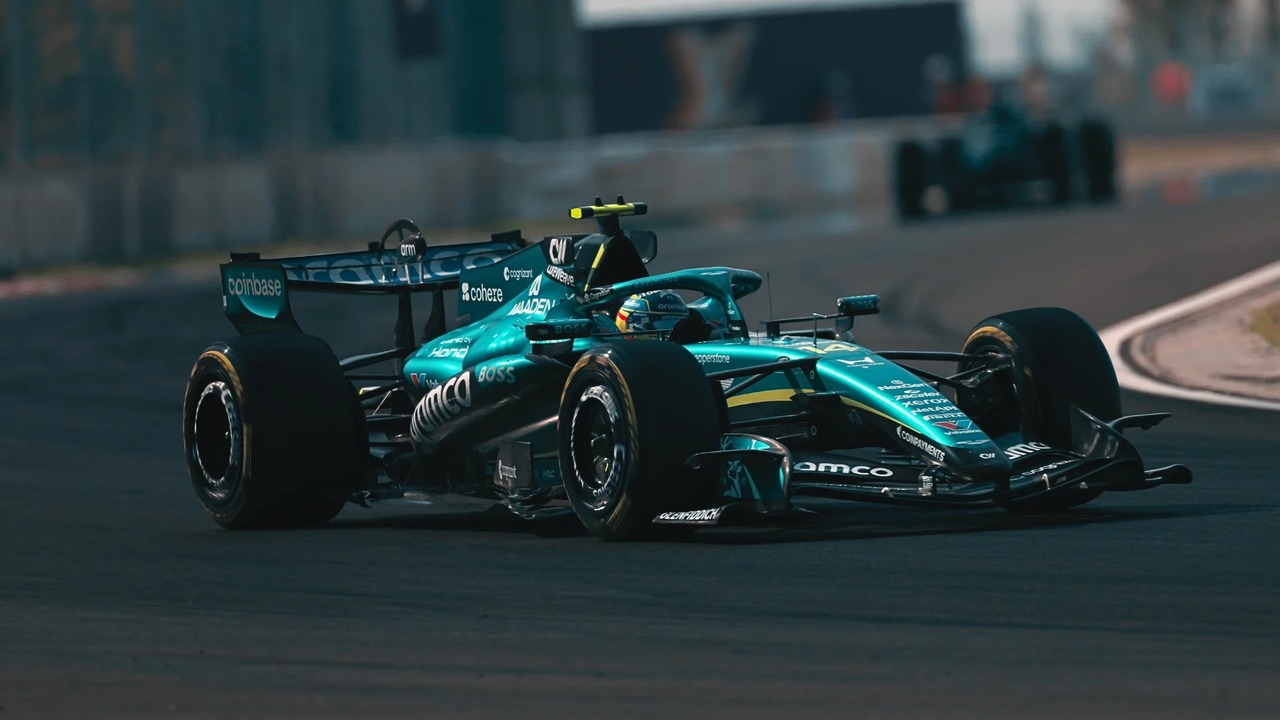
Aston Martin reached Formula 1’s summer break with a faster but still difficult AMR26. The car improved in Hungary, where Fernando Alonso finished seventh and Lance Stroll followed in eighth.
That progress revived comparisons with Adrian Newey’s McLaren MP4-18 from 2003. The older car never raced, although several of its ideas influenced later McLarens.
Aston Martin improved at the Hungarian Grand Prix
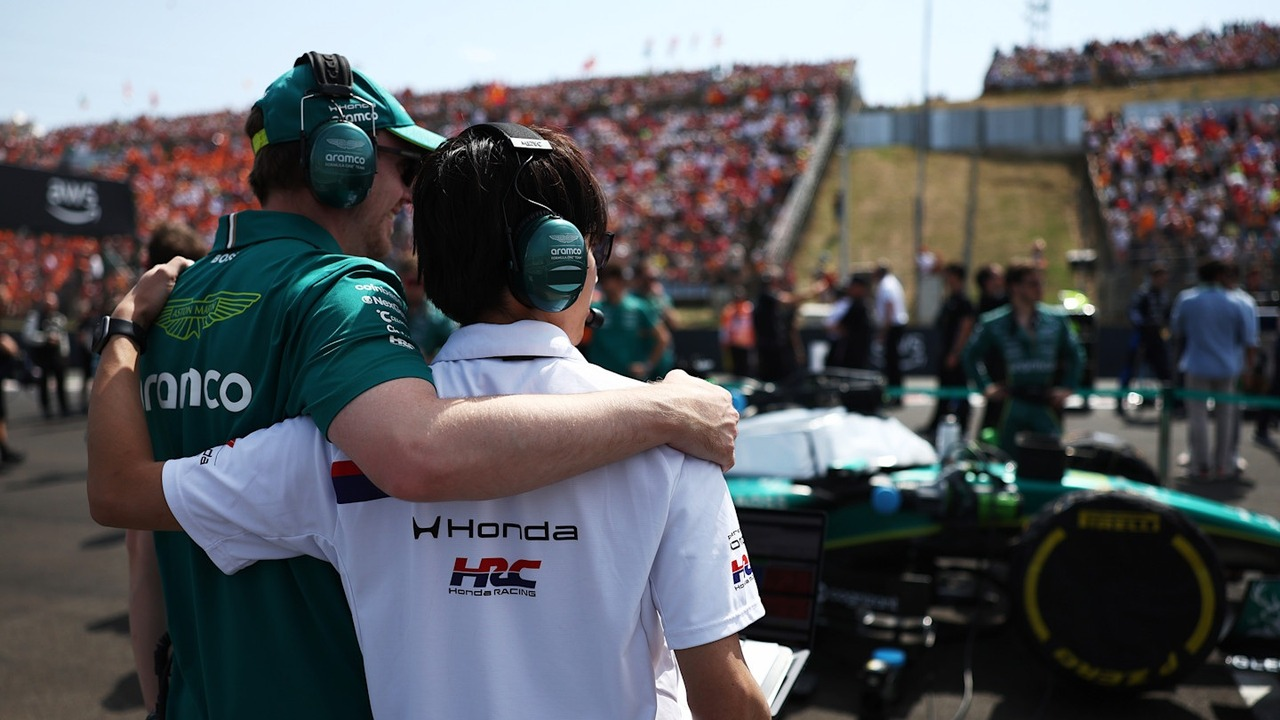
Aston Martin began the new rules with serious reliability and performance problems. Neither car finished the first two races in Australia and China. Both cars also stopped before the finish in Barcelona. Alonso scored the team’s first point in Monaco. That result offered relief, but it did not establish a consistent level. The AMR26 remained hard to balance across slow and fast corners. The picture became better at the Hungaroring. Alonso and Stroll reached the final part of qualifying together. They then converted those positions into seventh and eighth on Sunday.
Hungary rewards stable direction changes and confidence through long corners. Aston Martin’s result therefore showed genuine progress in the chassis. Rival car failures did not create the seventh and eighth places. The team still entered the break near the lower end of the standings. One strong weekend did not remove the problems seen earlier. It gave the engineers a clearer reference for the next update.
The MP4-18 used ambitious design solutions
Newey designed the McLaren MP4-18 for the 2003 Formula 1 season. Its compact body and tightly packaged mechanical parts followed an aggressive concept. The design aimed to reduce drag while keeping useful downforce. Testing exposed several weaknesses before the car reached a Grand Prix. Reliability problems interrupted running, while the structure also faced difficulties during required safety checks. McLaren delayed the planned debut more than once. The team continued racing its revised MP4-17D instead. That older car remained competitive enough to support Kimi Raikkonen’s championship challenge. McLaren therefore avoided introducing an unproven replacement during a close season.
The MP4-18 never started a race. Its development was not completely wasted, because the following MP4-19 carried several related ideas. Later revisions turned parts of the original concept into a usable package. This history matters when judging an unusual car. A difficult launch does not mean every design choice has failed. It can mean that several new ideas have not yet worked together.
Both cars used a very compact internal layout
Newey’s cars often place aerodynamic performance at the centre of the design. Bodywork, cooling and suspension positions then support the intended airflow. A gain in one area can create less space somewhere else. A compact internal layout can improve the outer shape but complicate heat control. It can also make repairs and changes harder during a race weekend. Longer runs reveal those connected effects more clearly. The AMR26 arrived with a new Honda power unit and another major regulation change. Aston Martin had to understand the chassis, energy system and cooling demands at the same time. Early failures reduced that learning time.
McLaren faced a similar problem with the MP4-18’s many new elements. When several systems change together, one stopped test can delay work across the whole car. The schedule then becomes as important as the original idea. The two projects still carry one important difference. Aston Martin has raced the AMR26 throughout the season. Its engineers already possess Grand Prix data that the MP4-18 never collected.
Aston Martin will test Honda’s updated engine
Aston Martin expects an updated Honda power unit after the break. The change gives the team another opportunity to improve performance and reliability. It also adds a fresh variable to the development programme. The engineers can compare the current power unit with the revised version. They will measure straight-line speed, energy deployment and cooling temperatures. Comments from Alonso and Stroll can then explain how those changes affect corner exits. Alonso and Stroll supply different experience. Alonso has driven several generations of Formula 1 machinery. Stroll has followed the Aston Martin project through its recent technical changes.
Alonso and Stroll finished seventh and eighth in Hungary. The team can compare that balance with data from faster circuits after the summer break. Aston Martin does not want the AMR26 to repeat the MP4-18’s problems. The bold parts of the current concept now require reliable and repeatable performance.
A difficult car can still provide useful data
Formula 1 development continues across seasons because teams preserve knowledge from every project. Wind-tunnel results, simulation tools and track measurements remain valuable after one chassis is replaced. McLaren used lessons from the MP4-18 even though the car never raced. The later MP4-19B won a Grand Prix and showed that the underlying direction could improve. The original programme still required major correction. Aston Martin’s immediate priorities are regular finishes, fewer technical failures and a broader operating window. The remaining races will provide data about each area.
Hungary supplied the best combined result before the break. Alonso and Stroll both used the improved package on the same weekend. That detail supports the view that progress came from the car. The MP4-18 comparison explains the scale of Newey’s approach without promising the same outcome. Aston Martin’s next results will provide the evidence for its own project.

No Comments