
Haas completed a two-day Formula 1 test at Fuji Speedway in Japan. Sho Tsuboi drove on Tuesday before Nirei Fukuzumi took over on Wednesday. Both drivers ran in front of supporters gathered in the main grandstand.
The event formed another part of the technical partnership between Haas and Toyota Gazoo Racing. It used an older Haas car under Formula 1 testing rules. That format provided real track time without affecting the current championship programme.
Tsuboi arrived with extensive experience from Japan’s leading domestic championships. Fukuzumi brought a different background from Super Formula and Super GT. Their two days linked Japanese racing talent with an active Formula 1 team.
Two Japanese careers meet the same car
Tsuboi is one of the most successful active drivers in Japanese motorsport. He has won four Super GT titles in the top GT500 class. He also secured the 2024 Super Formula championship after a consistent campaign.
The Fuji appearance was not Tsuboi’s first experience in a Haas. He previously drove for the team during another private test. That earlier mileage made the car’s procedures more familiar.
Fukuzumi entered the test with his own strong record in Japan. He won the Super GT GT300 championship during the 2019 season. He has also competed regularly in Super Formula against many leading Japanese drivers.
Wednesday gave Fukuzumi his first opportunity to drive a Formula 1 car. The step brought much greater braking force and aerodynamic grip. Fuji’s long straight also exposed him to sustained Formula 1 acceleration.
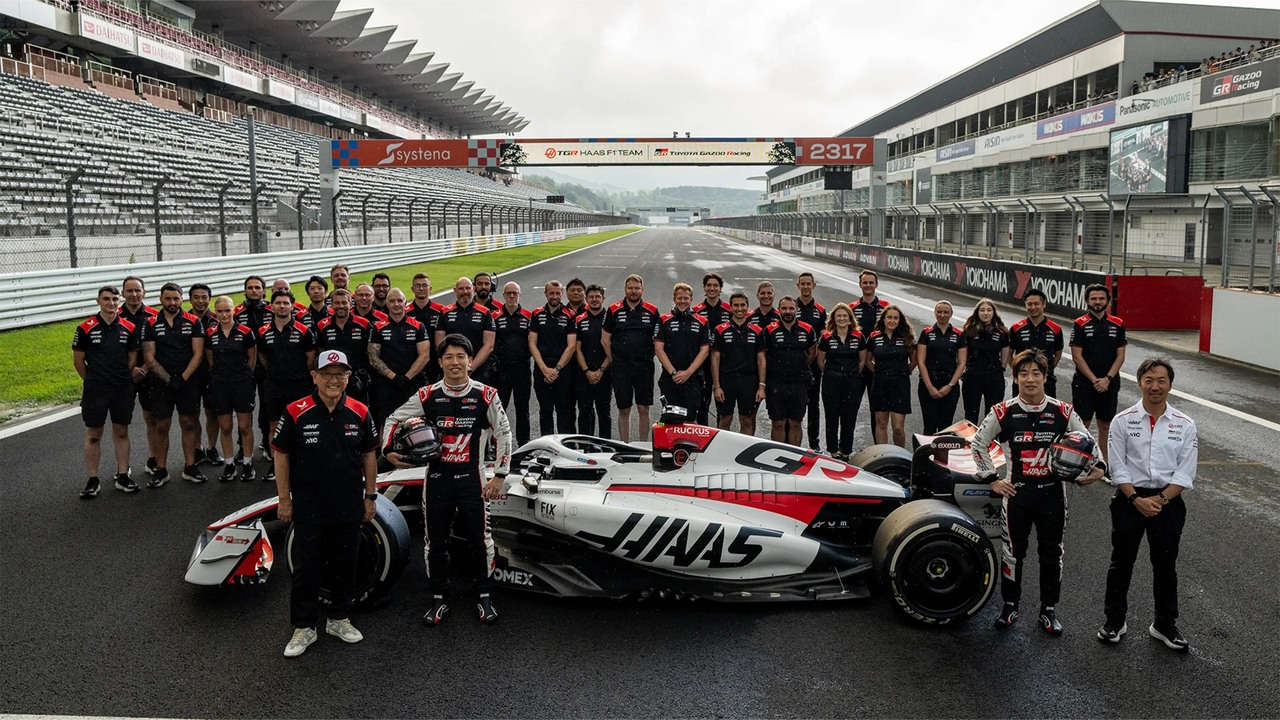
Fuji placed the programme before Japanese supporters
Fuji Speedway has a long connection with international and Japanese racing. The circuit previously hosted the Japanese Grand Prix in Formula 1. Its modern layout combines a very long straight with a technical final sector.
The opening corner follows one of motorsport’s longest full-throttle sections. Drivers arrive there with high speed and a heavy braking demand. That sequence provides a direct comparison between confidence and braking control.
The final part of the lap uses slower corners and changing gradients. Traction matters because each exit influences the next short acceleration. A clean final exit then carries speed onto the main straight.
Supporters could watch both drivers from the grandstands during the programme. That public setting separated the event from a closed development day. It also gave Toyota followers a direct view of the partnership.
An older car still provides serious work
Testing with a previous car gives drivers the speed of modern Formula 1. The steering, brakes and aerodynamic load remain far beyond most other categories. Longer runs also show how physical effort builds across a session.
Haas engineers received comments from two drivers on consecutive days. Each driver described the car’s balance through the same corners. Different descriptions often reveal useful details about the car’s behaviour.
The drivers also practise the procedures surrounding a Formula 1 outing. Those include steering-wheel settings, pit exits and communication with engineers. That routine is difficult to reproduce completely in another racing category.
Tsuboi and Fukuzumi completed separate programmes on consecutive days. Each driver worked with Haas engineers around the same Fuji layout. Both left the event with completed Formula 1 mileage.
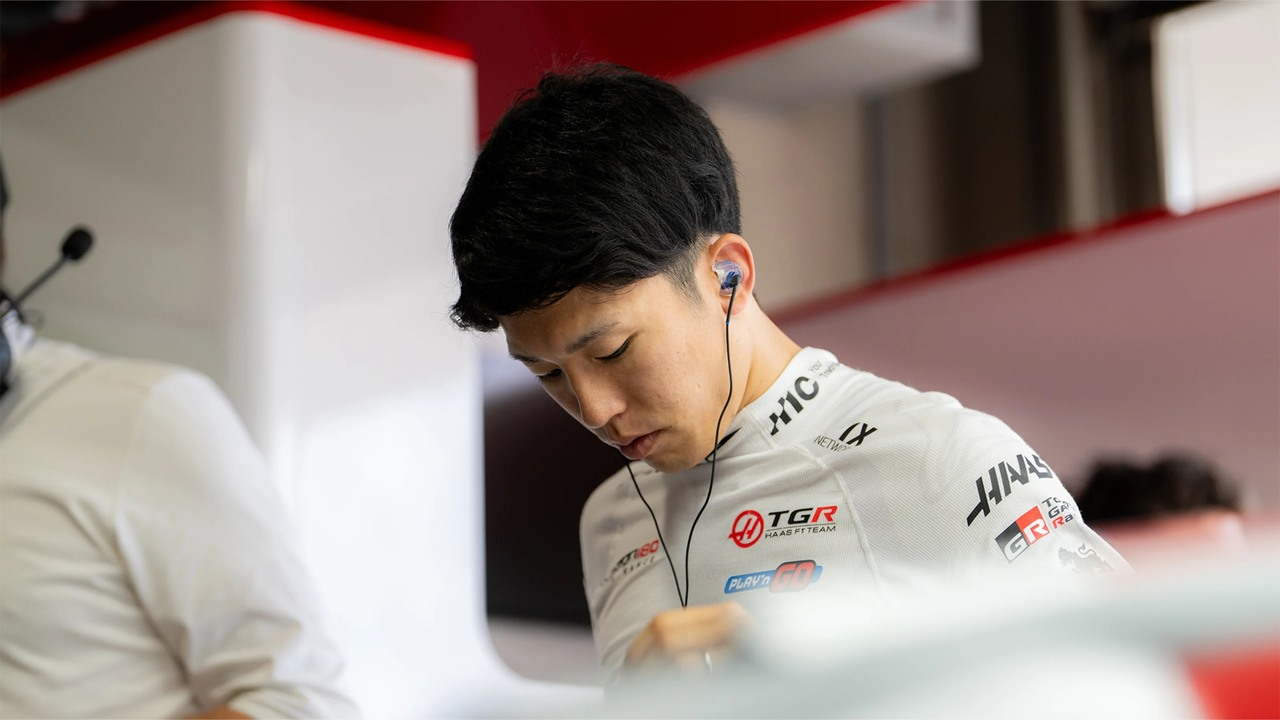
The Haas and Toyota relationship keeps growing
Haas and Toyota announced their technical partnership during the 2024 season. Toyota Gazoo Racing contributes expertise, facilities and development support. Haas offers access to an active Formula 1 environment.
Private tests have become the most visible part of that relationship. They create opportunities for drivers connected with Toyota’s racing system. Haas also gains additional running with experienced professional drivers.
The partnership does not change Haas’s position as a Formula 1 constructor. It gives the team another route for technical and sporting cooperation. Fuji placed that work inside Toyota’s home market.
Tsuboi and Fukuzumi left the event with different personal milestones. Tsuboi added another day to his Formula 1 experience. Fukuzumi completed the first Formula 1 drive of his career.
Japanese drivers gained Formula 1 mileage at home
Japan already has strong professional championships outside Formula 1. Super Formula cars demand high speed and precise aerodynamic control. Super GT adds traffic, teamwork and long race stints.
The Fuji test connected those domestic skills with Formula 1 machinery. It rewarded achievement in Japan with real track time. Both drivers reached the programme after substantial careers at home.
Supporters filled the grandstand during the public running. Fans saw Japanese drivers operate with Haas engineers at close range. That image made the technical partnership easier to understand.
Haas finished the test with two completed driver programmes at Fuji. Tsuboi strengthened an existing connection with the team. Fukuzumi added an important new experience to his career.

No Comments