
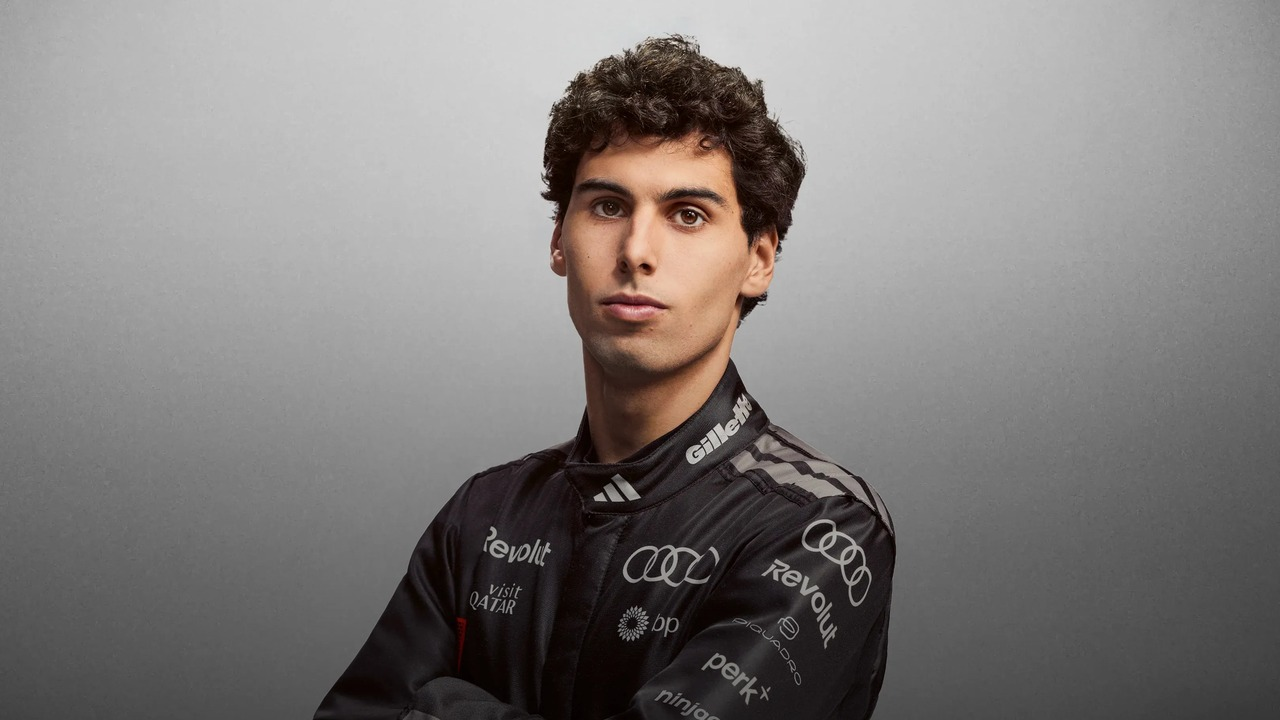
Gabriel Bortoleto has rejected the claim that the 2026 Formula 1 cars suit only certain driving styles. The Audi driver believes every competitor must adjust to the machinery available.
His comments follow a difficult opening half of the new rules cycle. Drivers now manage electrical energy more carefully during every qualifying lap and race stint.
Bortoleto places adaptation at the centre of a driver’s job
Bortoleto said he has not changed the foundations of his driving since last season. He still adjusts smaller details when the energy profile changes between corners. The Brazilian dislikes using driving style as an explanation for weak performance. He believes a Formula 1 driver must operate different cars, even when one method feels less natural.
That view does not remove the technical challenge. The current power units deliver electrical energy differently across a lap, so drivers cannot treat every exit in the same way. A long straight may require a careful corner entry and a strong exit. Another corner may receive little electrical support, allowing the driver to attack the entry more aggressively.
Electrical deployment has changed the work inside the cockpit
The 2026 power units use a much larger electrical contribution than the previous generation. Battery charge, recovery and deployment now influence lap time throughout a Grand Prix weekend. Teams prepare energy maps before each session. The driver then works with those settings while responding to traffic, tyre grip, wind and changing track conditions.
Bortoleto explained that fine adjustments are unavoidable. He changes his approach when a straight requires more energy or when deployment ends earlier than expected. Those decisions can affect braking, rotation and traction. A driver may sacrifice one part of a corner to protect speed later on the same lap.
Experienced champions remain competitive under the new rules
Bortoleto pointed to the leading drivers as evidence for his argument. Max Verstappen, Lewis Hamilton, Charles Leclerc and Lando Norris have all remained competitive in the new cars. Hamilton and Norris have won races during the current season. Verstappen has continued to extract strong qualifying laps, while Leclerc has remained among the leading drivers.
Their results do not prove that every car is equally easy to drive. They show that established skills still transfer when the technical demands change. Car performance remains the largest factor in the final order. A driver’s adaptation can improve the result, but it cannot erase a major difference between two teams.
The discussion began after unusual qualifying behaviour
Debate increased after Oscar Piastri reported unexpected power delivery at Spa. McLaren traced the difference to self-learning elements within the power unit control system. These systems respond to previous driver inputs and the available battery charge. Their decisions can change deployment later in the lap, sometimes surprising the person in the cockpit.
Bortoleto accepts that drivers now consider more variables. However, he does not believe the added work makes the cars unsuitable for a particular competitor. He instead separates personal preference from professional ability. A driver may dislike the rules while still finding the technique needed for a competitive lap.
Audi can compare his view with its own race data
Audi has collected detailed information during the first half of its works Formula 1 programme. Bortoleto and Nico Hulkenberg provide feedback from different levels of experience. Engineers can compare steering, braking, throttle and energy use between the two cars. That work shows where a technique helps and where hardware creates the main limitation.
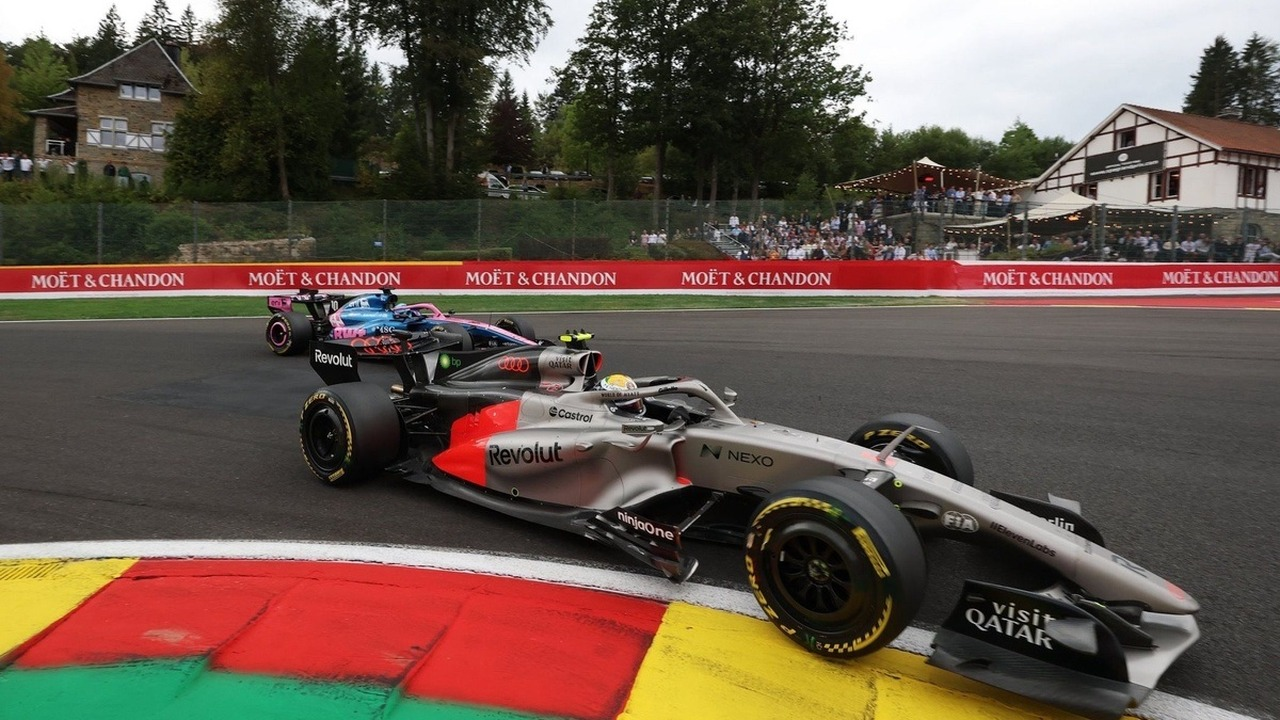
Bortoleto’s position is therefore based on more than a general opinion. He has completed qualifying laps and race distances with the new engine and chassis package. Further rule changes are planned for later seasons. Until then, the current cars remain the standard, and every driver must work within the same technical framework.
The public vote showed an almost even division
A survey attached to the discussion produced a 47-53 split. The narrow margin showed that supporters remain divided about the character of the new cars. Bortoleto’s answer did not deny that drivers have personal preferences. He separated those preferences from the professional duty to extract the available performance.
He also avoided naming one style as the correct solution. Different corners and energy states require different choices within the same lap. The close vote gives useful context to his position. The debate remains open, while his own response places responsibility inside the cockpit.
Energy use now changes from circuit to circuit
The electrical system does not create the same challenge at every venue. Long straights demand more deployment, while short straights change the available recovery time. A driver therefore works with engineers before every session. The team selects deployment targets, and the driver adapts braking and acceleration around them.
Bortoleto said the basic foundations of his technique remain intact. The smaller adjustments concern timing, energy and the way speed is carried between corners. His conclusion stays simple after those details. The quickest drivers continue to find solutions when the machinery changes around them.
The same regulations apply across the full grid
Bortoleto discussed adaptation as part of competition under one technical framework. Every team works within the same energy and chassis rules.
Drivers still receive different cars because each constructor develops its own design. His point concerned the response to those differences, rather than one fixed driving technique.
No Comments