
George Russell says he has had to change his driving style to suit the 2026 Mercedes. He compared the process with a golfer rebuilding a swing: the new movement feels conscious and slow before it becomes natural.
The work followed early reliability problems and a period when teammate Kimi Antonelli was consistently faster.
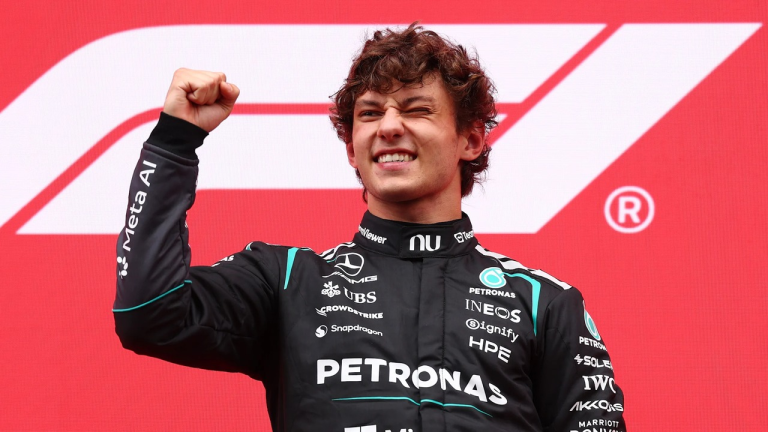
Russell has since won in Austria and reached the podium in three consecutive Grands Prix. He has reduced Antonelli’s championship advantage to 25 points.
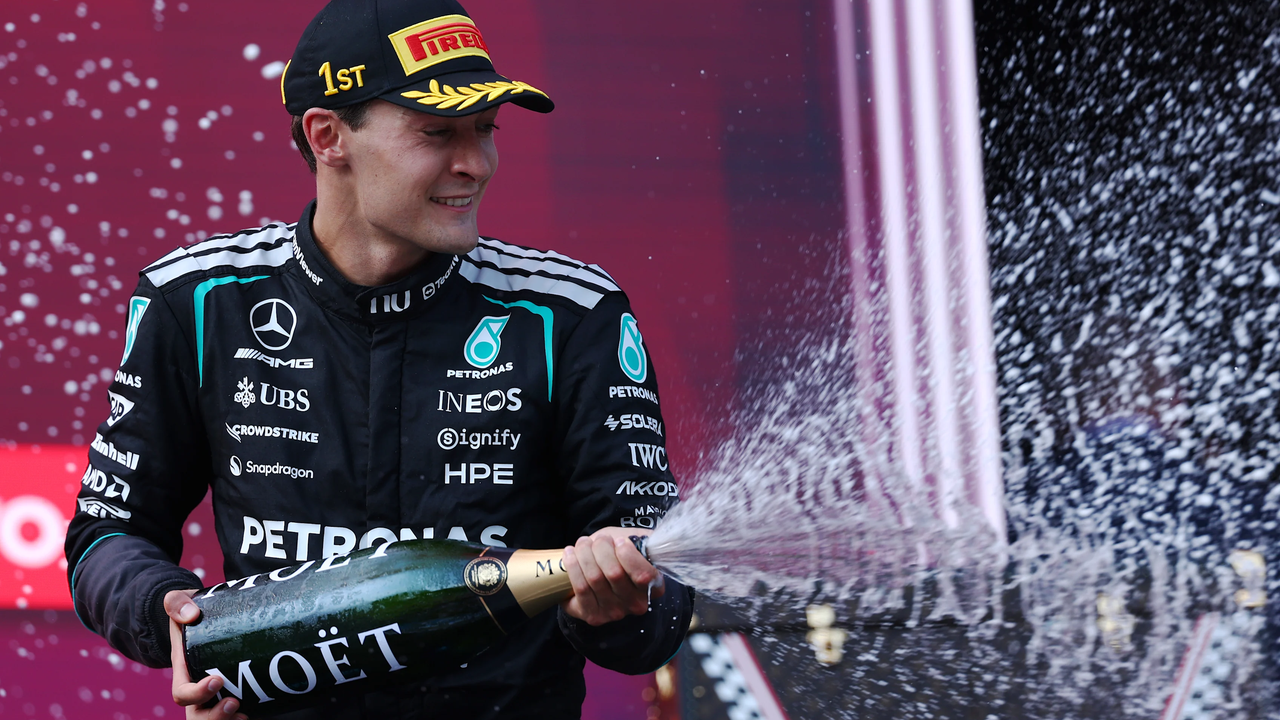
Those results show progress, but Russell says he is still adjusting his driving to the power unit, tyres and setup.
Russell compared the change to rebuilding a golf swing
The Mercedes driver said the 2026 car required him to alter habits that had worked under the previous rules. He used a golfer changing a swing as the clearest comparison.
The point was about repetition and confidence. A new action can feel slower before it becomes natural, even when the driver believes it will improve performance.
A driver builds habits over thousands of laps. Braking pressure, steering speed and throttle timing begin to happen without a separate thought.
The 2026 car asks Russell to interrupt some of those habits because its energy use and tyre behaviour reward a different sequence.
The new power unit changed the way laps are managed
The 2026 regulations introduced a larger electrical contribution and different energy use. Drivers have had to learn when power is available and how that affects acceleration.
Russell also referred to the tyres and car setup. His interview described several connected changes rather than one isolated steering or braking problem.
Russell’s victory did not mean the new style was complete. It showed that the process can already work across a race weekend.
A win requires qualifying pace, tyre control, clean execution and enough confidence to repeat the correct actions under pressure.
| Signal | Meaning |
|---|---|
| Driver | George Russell |
| Recent result | Austria win and three straight podiums |
| Gap to teammate | 25 points |
Austria provided his strongest result of the season
Russell won the Austrian Grand Prix and arrived in Belgium after three consecutive podium finishes. Those results showed that his adaptation had already produced competitive weekends.
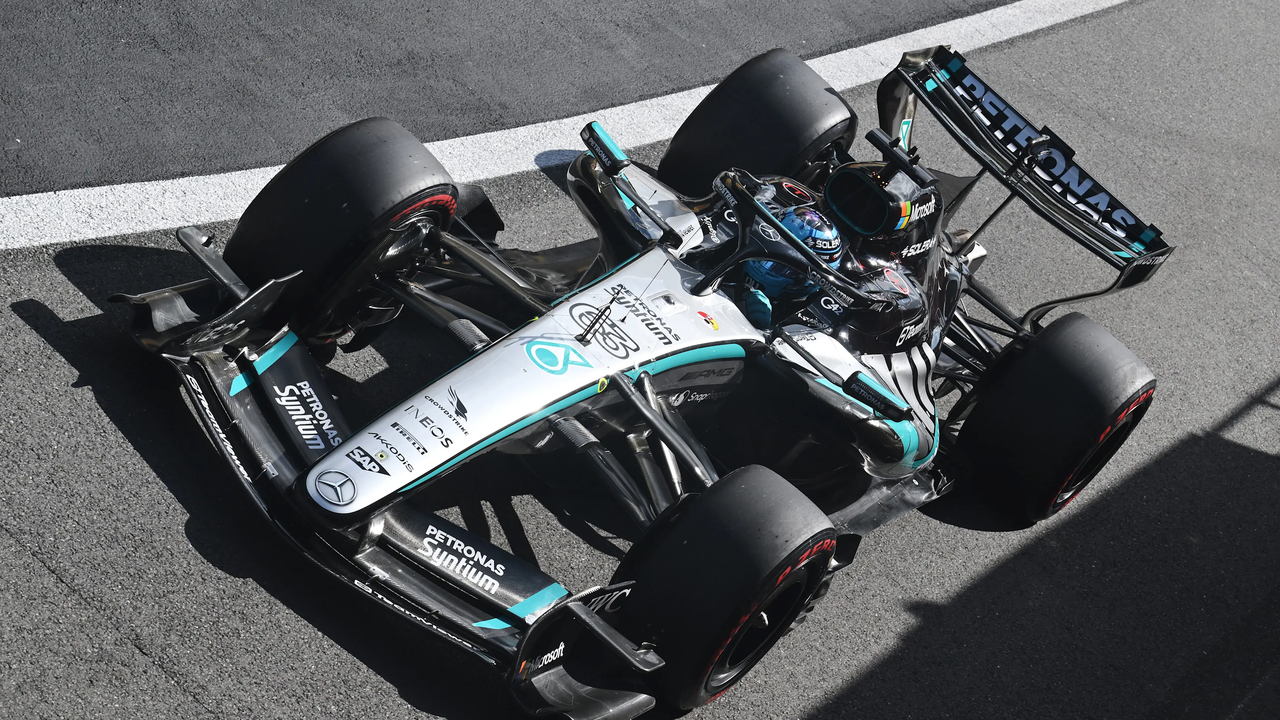
One victory does not prove that every difficulty has disappeared. It does provide a confirmed result against which his comments can be understood.
The following podiums added useful evidence because they came at different circuits. One strong track can flatter a car or driver.
Russell’s current position can be compared with the five main contenders arriving at Spa-Francorchamps.
Several results suggest that Russell has found a wider base, even while some techniques still require conscious thought.
Antonelli leads the internal points comparison
Kimi Antonelli held a 25-point advantage over Russell before the Belgian weekend. The two Mercedes drivers reached their totals through different results across the opening part of the season.
Russell described his own learning process and did not present his teammate as a driving template. Their points remain the direct comparison available before Spa-Francorchamps.
Russell is chasing Antonelli, but Lewis Hamilton is only seven points behind him. Ferrari have won two races and continued to add performance. Russell has correctly treated them as a lasting threat rather than a circuit-specific surprise.
Ferrari have moved closer in the championship
Recent Ferrari results reduced Mercedes’ margin in the constructors’ standings. Hamilton was also seven points behind Russell in the drivers’ table before Belgium.
Those figures add pressure to the second half of the season. They do not create an engineering programme or predict which team will be faster at every circuit.
Russell’s golf comparison concerned muscle memory. A driver repeats braking, steering and throttle actions over thousands of laps until they feel automatic. The 2026 car changed the useful sequence in some corners.
He said the temporary loss of comfort was part of replacing those old habits.
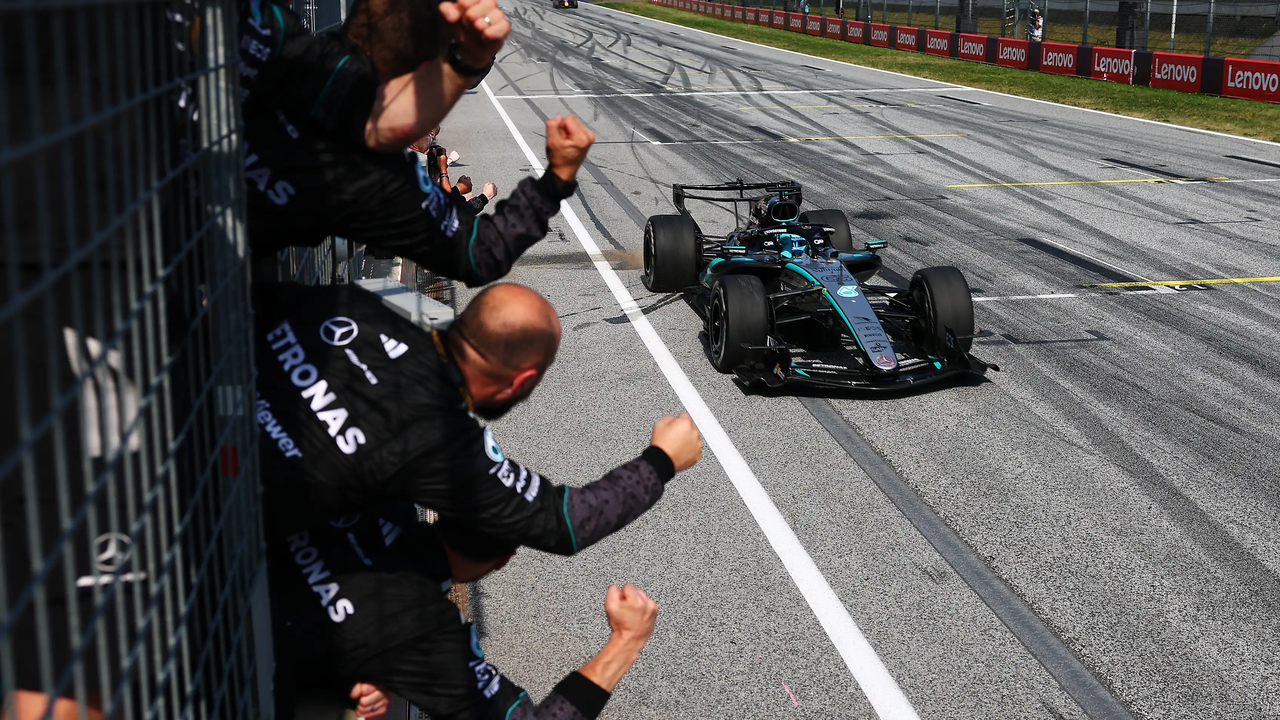
Spa-Francorchamps offers a new circuit for the revised approach
Spa-Francorchamps combines high-speed corners, long straights and major elevation changes. It is different from the Red Bull Ring, where Russell took his victory.
The weekend will add another result to the 2026 record. Russell’s public explanation is limited to the changes he described in the interview.
The three consecutive podiums include the victory in Austria and two further top-three finishes. They provide results from more than one weekend. Russell still placed the progress inside a longer learning process.
He did not claim that every circuit or setup problem had been solved.
The interview explains progress without declaring it complete
Russell said the changes are becoming more natural. His recent podium run supports the idea that he has moved beyond the hardest early part of the adjustment.
The remaining races will show how stable that progress is. By July 17, his recent results included the Austria win and three consecutive podiums, while Antonelli remained 25 points ahead.
Russell’s explanation links his recent results to a process that began earlier in the season. Austria supplied the victory, while the following podiums showed that the improvement continued beyond one circuit.
No Comments