
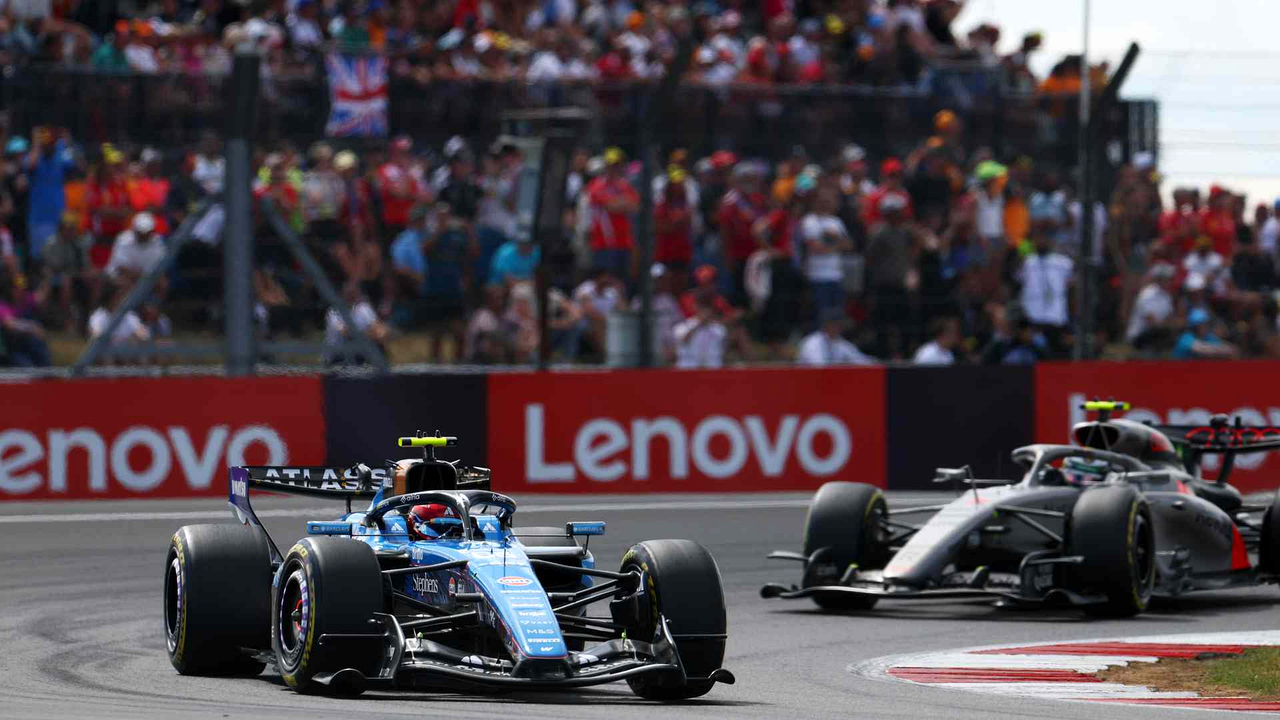
Carlos Sainz left the British Grand Prix with a rare Safety Car infringement on his record. The sanction did not create a title shock, but it gave Williams a rule lesson it cannot treat as small.

A sanction that was easy to miss
Safety Car rules can look calm from the outside because the field moves slowly and the gaps appear stable. That is why this Sainz case matters. The offence was not a wild move or a clear crash. It came from a control phase where every metre and every timing line still counts.
Williams has to read the decision in a practical way. A driver can lose time even when the car is not being raced at full speed. The team must make sure its dashboard messages, radio messages and driver checks are simple enough for wet and busy laps. A small delay in that chain can turn into a sanction.
The rule has a race reason
The Safety Car does not only slow the cars. It protects marshals, gives the race director one order to manage, and stops drivers from creating surprise gaps. If one car moves outside the exact limits, the whole train becomes harder to control. That is why the stewards rarely leave these decisions as warnings.
Sainz is experienced enough to understand that point. He does not need a lecture about race craft. What he needs is a cleaner process for the next neutralised period. Williams will also want the same process to work for Alex Albon, because this kind of sanction can hit either side of the garage.
| Sainz point | Main note |
|---|---|
| Sanction type | Rare Safety Car infringement after the British Grand Prix. |
| Team risk | Williams lost control time without losing car pace. |
| Key fix | Cleaner radio and steering wheel references under neutralisation. |
| Main lesson | Slow race phases still need exact execution. |
Also read: Hamilton Reprimand Keeps Ferrari Focus on Yellow Flag Detail. More news: Silverstone Side Moments Show Why British GP Still Feels Different.
Williams cannot waste quiet points
Williams is not in a position where it can throw away small results. Its season depends on turning messy weekends into useful finishes. A Safety Car sanction hurts because it does not come from a slow car. It comes from a missed control detail, and those are the mistakes a growing team must remove first.
The British Grand Prix also showed how much pressure the midfield now carries. Teams behind the front group are close enough that one sanction can change the story of a Sunday. Williams needs clean execution if it wants its improved pace to mean more than good practice comments.
Sainz remains a useful guide
The incident should not hide the wider value Sainz brings. He is still one of the best drivers on the grid at reading long races and explaining car behaviour. That makes the sanction more frustrating, but also easier to use. If the feedback is clear, Williams can adjust quickly.
The team should ask simple questions. Was the radio message early enough? Did the steering wheel show the right data? Did the driver have a clear reference point? The answer may be technical or procedural, but it has to be found before the next mixed race.
The fix should be boring
The best response is not a dramatic reset. Williams only needs a repeatable rule routine. That means short commands, no crowded radio traffic and a shared understanding of what the car can do under the Safety Car. Boring work is often what saves points later.
Sainz will move on from the sanction faster if the team turns it into a checklist. That is the lesson from Silverstone. A fast car can still give away ground in a slow phase, and the next close race may punish that even harder.
Why the note travels
The sanction also gives Williams a clear coaching clip for future races. The team can replay the neutralised laps, compare the target delta with the car’s real position and decide which instruction reached Sainz too late or too softly. That work is not glamorous, but it is exactly where a midfield team protects points it cannot afford to lose.
It also matters for the drivers around Williams. Once stewards confirm a rare Safety Car offence, rivals know the rule will be watched closely at the next race. Williams must therefore arrive with a cleaner habit before the issue becomes a pattern others expect to exploit.
Williams margin
Williams also have to read the sanction inside the larger midfield table. A neutralised lap mistake is easier to accept for a team with a large points cushion, but Williams are still building the habit of finishing every chance cleanly. Sainz gives them experience, Albon gives them continuity, and the car has started to show better weekends. That progress will mean less if the team keeps losing detail points in race-control phases where no rival has actually outpaced them.


No Comments