
George Russell admitted he is still learning how to place the Mercedes in its best setup window. That is a useful warning before a home race where recent momentum could easily become overconfidence.
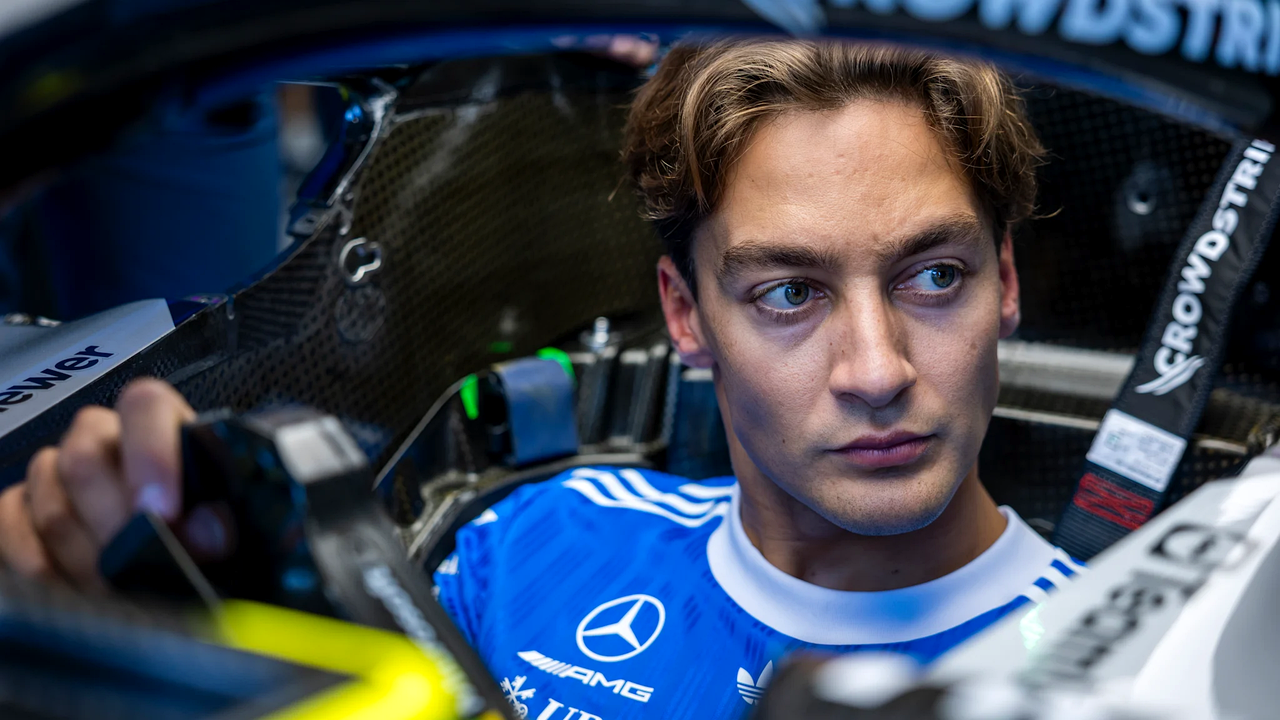
Momentum is useful only if it stays precise
Russell’s admission was valuable because it resisted the easiest British Grand Prix story. Mercedes have reason to believe in themselves, and Russell has reason to believe a home weekend can be more than atmosphere. But confidence in Formula 1 becomes dangerous when it skips the details. His point was simple: Mercedes still have to put the car in the right setup range before the crowd, the recent win and the local emotion can matter.
Silverstone is not forgiving to a car that is slightly out of its comfort zone. A platform that feels balanced at the start of a lap can become costly as wind, tyre surface and fuel load change. Russell is right to treat the sweet spot as a live question. A Sprint weekend gives Mercedes one practice session to decide how much wing to carry, how to protect the tyres and how hard to push the ride-height compromise.
The British pressure is more technical than patriotic
The public version of the weekend will focus on a British driver in a Mercedes at Silverstone. The competitive version is colder. Mercedes need the car to rotate without forcing the rear into overheating, and they need enough straight-line efficiency to defend against McLaren and Red Bull. None of that is guaranteed by a home crowd.
British GP win market already placed Russell, Norris and Verstappen in different pressure lanes. Russell’s lane is the one most likely to be mistaken for comfort. He has recent proof, but he also has a car that still needs correct handling. If Mercedes miss the first set-up direction, the home advantage becomes a louder reminder of what they failed to convert.

| Key point | Reading |
|---|---|
| Driver | George Russell, carrying Mercedes’ British hopes after a strong recent run. |
| Main concern | Finding the car’s sweet spot remains a live task rather than a solved problem. |
| Team-mate layer | Kimi Antonelli’s learning curve keeps Mercedes’ comparison sharp. |
| Silverstone risk | High-speed corners and the Sprint schedule reduce the time available to correct direction. |
Antonelli keeps the internal example alive
Kimi Antonelli’s recent lessons add a useful counterweight to Russell’s position. Mercedes are not just managing the lead driver’s home expectation; they are also trying to develop a young driver who has already had to learn from difficult weekends. If Antonelli finds the right setup quickly at Silverstone, it will help the team validate the car’s direction. If he struggles, Mercedes may need to decide whether the issue is driver confidence or set-up sensitivity.
That internal comparison matters because Mercedes are still shaping the future around both drivers. A clean Russell weekend would support the present. A clean Antonelli weekend would strengthen the project. The most valuable outcome is both cars arriving at the same balance conclusion early enough that the engineers can make performance choices rather than repair choices.

One practice hour changes the psychology
Sprint weekends punish teams that need repeated experiments. A normal Friday lets a team test, miss, regroup and try again. Silverstone gives less time and more consequence. The car must be close enough immediately, because Sprint Qualifying can lock the mood before Mercedes have finished exploring the full answer.
That is why Russell’s caution should not be read as insecurity. It is an accurate description of the format. The strongest teams this weekend will be the ones whose simulator work arrives in the real world with minimal translation loss. If Mercedes need too many laps to understand the car, the sweet spot might be found after the session where it mattered most.
A home win bid needs control before attack
Russell can absolutely fight at Silverstone if Mercedes bring the car into the right range. The circuit rewards commitment, and a confident Russell has the precision to make that commitment count. But the weekend has to start with restraint: correct tyre preparation, no emotional over-driving in the opening runs and a clean understanding of how the car behaves in traffic.
The sharper reading is that Mercedes are contenders, not owners of the weekend. Russell’s sweet-spot warning keeps that distinction alive. If the team listen to it, their home pace can become real. If they ignore it, Silverstone has enough speed to reveal the gap between momentum and mastery.



No Comments