
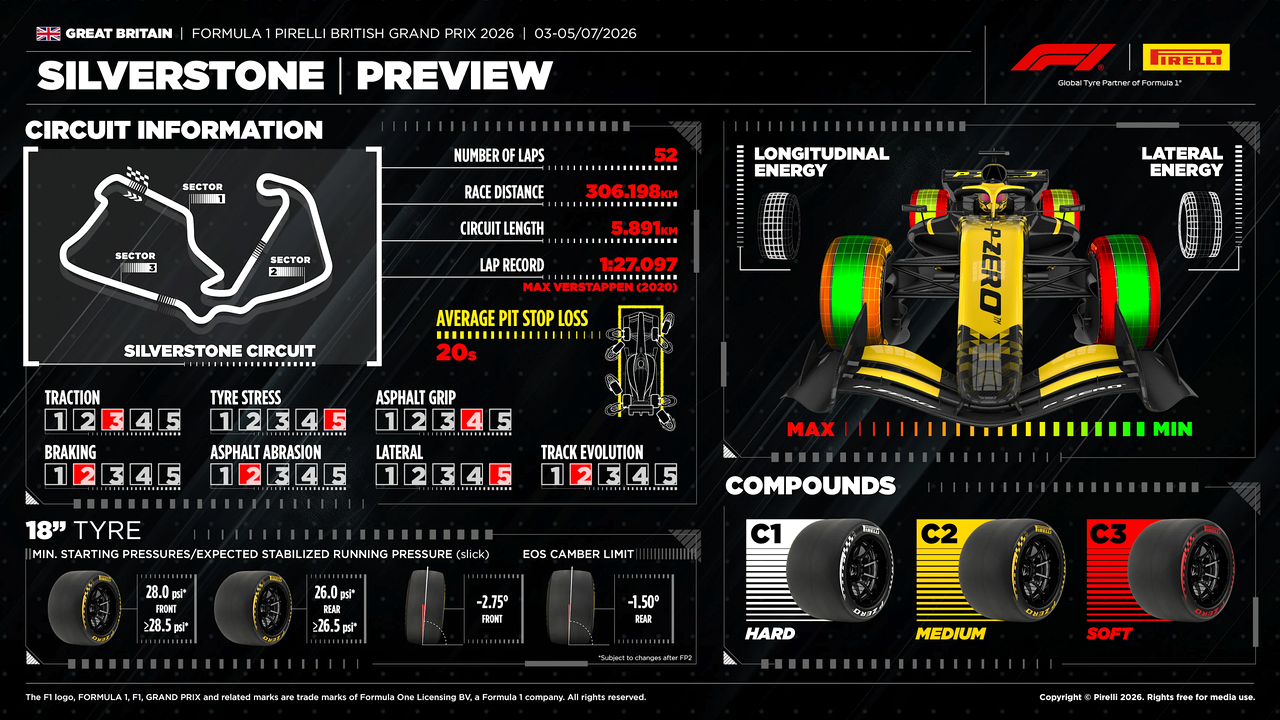
Pirelli have taken C1, C2 and C3 to Silverstone for the 2026 British Grand Prix, and the Sprint format means teams get only one practice hour before tyre choices start to carry real consequences.
The tyre decision narrows Friday immediately
Silverstone has never been a track where teams can hide a weak tyre model for long. Pirelli’s hardest allocation tells the paddock that the race will be judged by side load, temperature control and how cleanly each car protects the left-front through long, fast corners. That matters more in 2026 because the weekend is not giving engineers three practice sessions to find the answer gradually.
The white hard is likely to appear early in FP1, but the real story is how little time the teams have to compare it properly against the medium and soft. Silverstone Sprint Weekend already made the schedule compressed; the hardest tyre trio now makes the first hour a direct check of simulation work Ride height, wing level and how much each team trusts the data it brought from the factory.
Why C1 is not just a conservative choice
C1 can look like the safe end of the range, but at Silverstone it is also a reminder that the circuit punishes sliding. If a car is nervous through Maggotts, Becketts or Chapel, the driver does not just lose a tenth; the tyre absorbs stress lap after lap. A compound that survives that punishment gives teams a platform, but it will not rescue a balance that overheats the surface before the stint has a rhythm.
The Sprint format deepens that choice because every extra learning lap has a cost. Teams want enough running to understand the hard tyre, but they also need medium and soft information for Sprint Qualifying and the main grid session. The weekend becomes less about collecting mileage and more about deciding which questions are worth spending laps on before competitive parc ferme pressure arrives.
| Key point | Reading |
|---|---|
| Compounds | C1 hard, C2 medium and C3 soft, the hardest dry range available. |
| Sprint limit | Drivers receive 12 dry sets instead of the usual 13 across the weekend. |
| Track load | Silverstone’s fast fast corners put the front axle under long lateral stress. |
| Likely race idea | Pirelli expect the grippier C2 and C3 to shape most one-stop thinking. |
The medium may become the honest benchmark
The C2 medium could tell the clearest story of the weekend. It has enough grip to show how much downforce a team can carry, but it is not so soft that one messy warm-up lap makes the reading useless. If Mercedes, McLaren or Red Bull can repeat strong medium runs without graining, they will have evidence that the car is working rather than only flashing on low fuel.
For the midfield, the medium matters for another reason. Sprint weekends often tempt teams into aggressive soft-tyre use, but Silverstone’s long corners can make that look brave for half a lap and expensive by the end of a run. A stable C2 baseline may decide who gets through traffic cleanly and who spends Sunday defending with tyres that no longer answer the steering wheel.
Soft laps will flatter the brave and show the messy
The red C3 is still the qualifying tyre, so nobody can ignore it. But Silverstone is not a place where a soft tyre automatically produces a simple performance jump. Drivers need to prepare the front, commit through the fast section and keep enough rear support for traction later in the lap. Miss one part of that sequence and the tyre’s peak disappears before the stopwatch gives the team a proper answer.
That is why the British GP win market cannot be separated from tyre delivery. A driver may look quick in one sector and normal in the next if the soft is outside its chance. In a field that has already produced narrow margins, the fastest car may be the one that gives its driver repeatable tyre preparation rather than one heroic lap.
Weather can still move the whole weekend
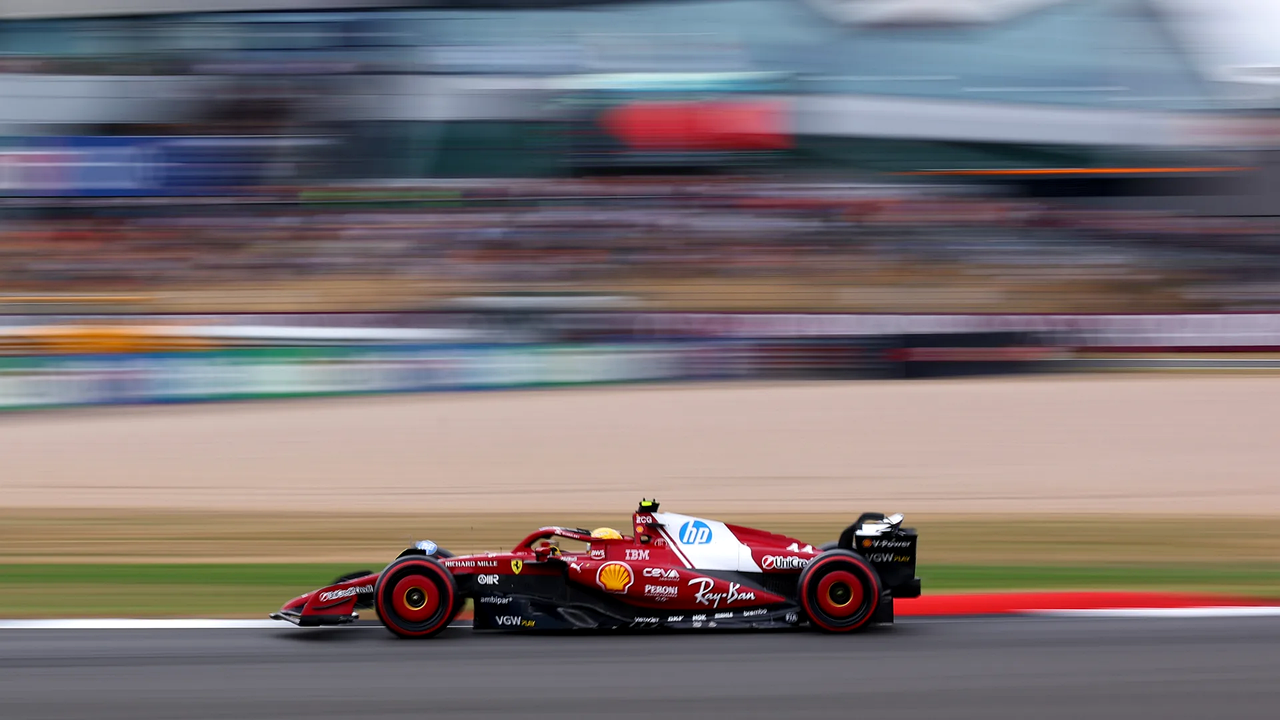
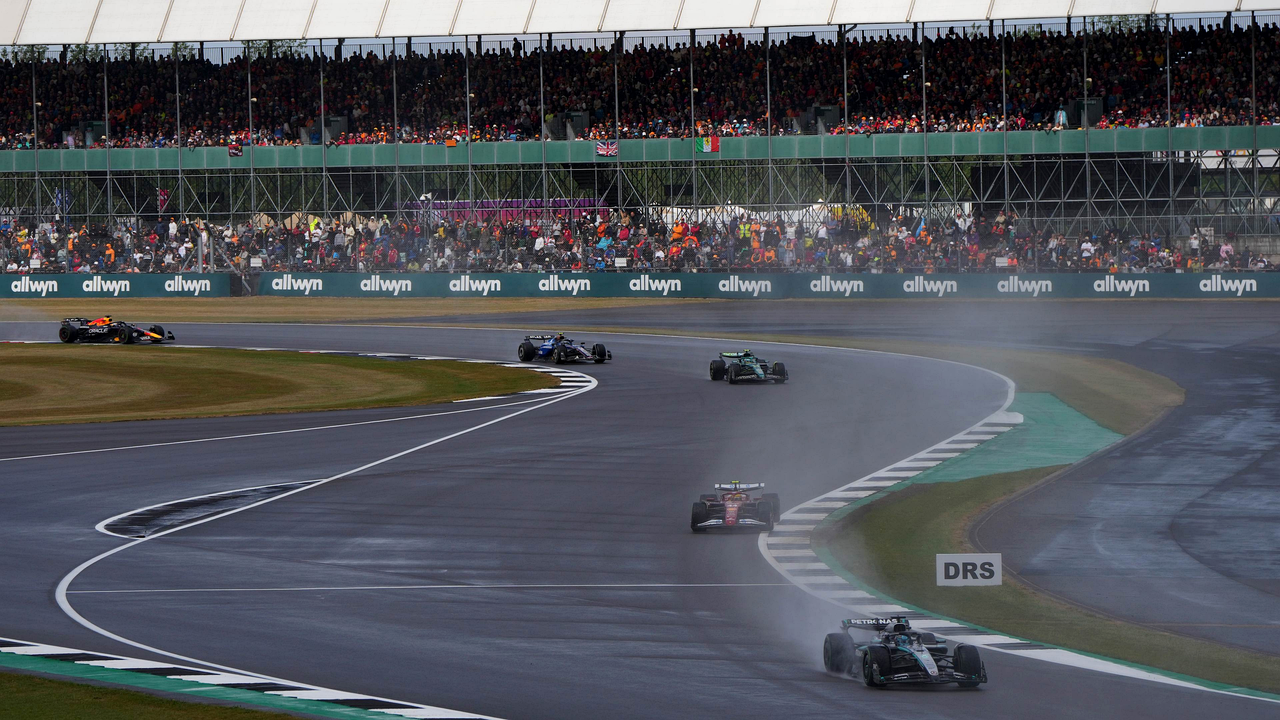
Pirelli’s preview also leaves room for the familiar British problem: showers. The last two Sunday races at Silverstone brought rain into the conversation, and a Sprint weekend is especially vulnerable to changing conditions. A wet FP1 would leave teams short of dry information, while a damp qualifying session could turn tyre warm-up into the main sporting divide.
That uncertainty is not a decorative side story. It affects how many new dry sets a team wants to keep untouched, how early it is willing to burn a soft Whether a driver builds confidence with conservative run plans or asks the car for commitment before the track has fully declared itself. Silverstone rewards courage, but this weekend also rewards tidy inventory management.
A technical weekend with no hiding place
The clearest teams will make the weekend look simple: stable FP1, no panic between compounds, a Sprint plan that does not damage Sunday. A race strategy that uses the C2 and C3 without overstretching either. That is the dream version. The more realistic version is messier, because one under-read tyre can drag a team into the wrong aerodynamic compromise.
the key is not just which compound starts the Grand Prix. The sharper question is which team understands why each compound behaves as it does. Silverstone’s hardest set will not create drama by itself; it will reveal which garages have turned the Sprint restriction into control and which ones are still chasing the tyre after the weekend has already become serious.
The garage split will reveal the confident teams
The most showing detail may be how quickly each team separates its run plan between race learning and single-lap preparation. A confident garage can spend FP1 gathering controlled comparison data, because it already trusts the baseline. A nervous garage will keep changing front wing, ride height or tyre preparation method, and those changes will leave the drivers with less rhythm before Sprint Qualifying. Silverstone punishes that uncertainty because the lap asks for commitment. If the driver is still asking whether the front will stay alive through the fast section, the tyre information becomes contaminated by hesitation.
That is why the weekend should be read through process as much as pace. A team that looks only fourth or fifth fastest on Friday may still be in good shape if the long-run degradation is stable and the driver understands the warm-up. A team that sets one purple sector but cannot repeat it may be chasing a peak it cannot use on Sunday. The hardest Pirelli range turns Silverstone into a test of technical honesty: who can admit what the car is doing early enough to build a whole weekend around it?
Race strategy starts before the race exists
The Sunday strategy discussion will be shaped by decisions made long before the lights go out. If teams burn too many softs chasing confidence in Sprint Qualifying, they may leave themselves with a narrower race plan. If they protect tyres too cautiously, they may qualify out of position and spend the Grand Prix in traffic, which damages tyres anyway. Silverstone makes that trade-off especially difficult because clean air can protect the front axle while dirty air can turn a sensible stint into a defensive problem.
That is why the tyre check is also a courage check. Teams must decide when the evidence is strong enough to stop testing and start committing. The best race engineers will not wait for perfect certainty, because the format will not provide it. They will identify the most reliable pattern from limited data and give the driver a plan that can survive weather, traffic and Safety Car risk. On this weekend, conviction may be worth as much as one extra set of numbers.


No Comments