
McLaren Need Race Pace to Repair a Quiet Austria Qualifying
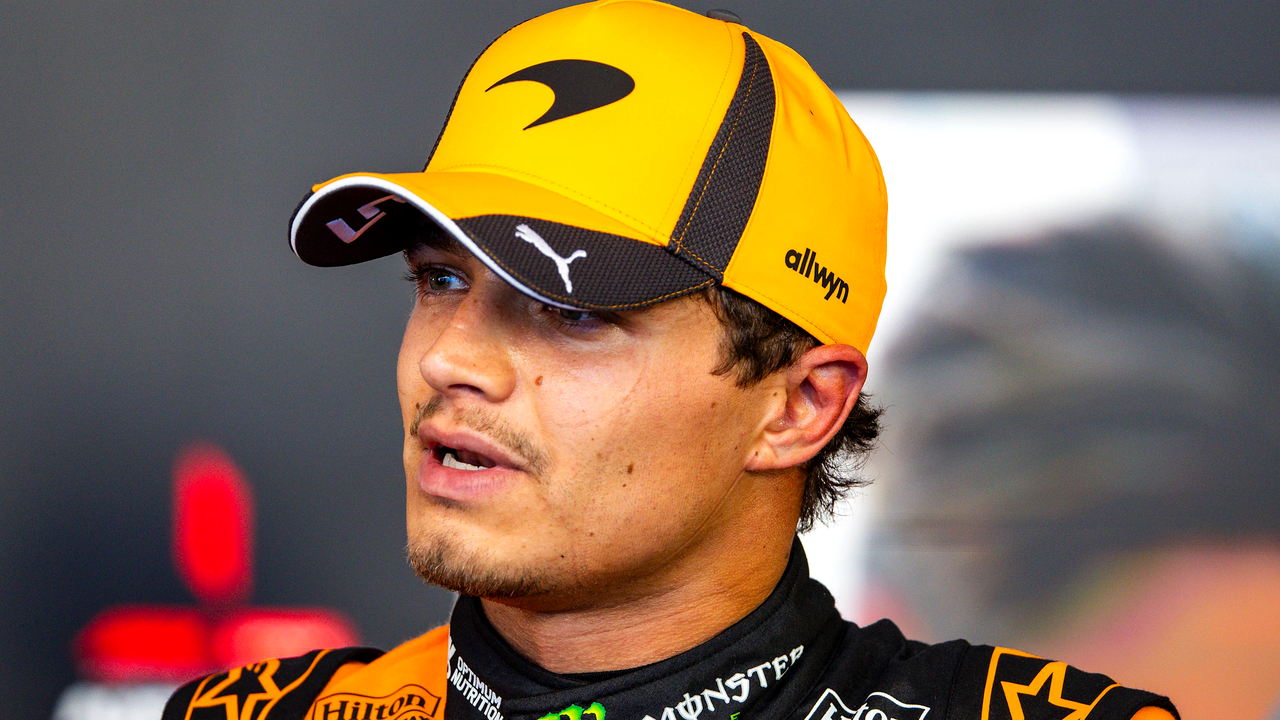
McLaren expected more from Austrian qualifying after encouraging practice pace, but Norris and Piastri had to settle for sixth and seventh.
The result does not remove McLaren from the race. It changes the assignment: the team now need tyre life, clean air windows and fast pit calls to undo a grid position that was below expectation.
How the session turned
Norris qualified sixth and Piastri seventh after McLaren could not match the final Q3 pace.
Norris said the team had hoped for more from the session.
Practice had shown more promise, especially once Norris recovered from Friday’s limited running.
Where the race pressure sits
The first stint will reveal whether McLaren’s race pace is stronger than its qualifying result.
Starting together gives the team strategic flexibility but also risks stacking behind the same rivals.
McLaren cannot afford to spend too long behind cars with similar straight-line speed.
Key details
| Area | Detail |
|---|---|
| Grid | Norris P6, Piastri P7 |
| Team mood | hoped for more |
| Opportunity | race pace and tyre offset |
| Risk | traffic in the same strategy window |
What the first stint has to answer
A tyre-offset plan may be more realistic than trying to pass every rival on track.
The weekend can still turn if McLaren’s long-run degradation is cleaner than Ferrari or Mercedes expect.
Why the Red Bull Ring keeps the margin small
The first stint will reveal whether McLaren’s race pace is stronger than its qualifying result; that detail changes the meaning of the first stint will reveal whether McLaren’s race pace is stronger than its qualifying result, especially if the car loses balance behind another rear wing; the narrow margin is manageable only while the DRS train avoids creating a second problem.
If tyre temperature stays tidy, Norris P6, Piastri P7 becomes a race tool rather than a Saturday statistic; the pit wall will measure it through tyre temperature, radio timing and the cars around the Mercedes or Ferrari.
Norris said the team had hoped for more from the session; the first strategy call cannot be rushed, because Austria punishes both early tyre damage and late traffic; the useful target is a repeatable rhythm when fuel load, traffic and tyre drop arrive together.
The opportunity marker, race pace and tyre offset, will be tested once track-limit discipline meets dirty air and compressed gaps; saturday speed has to survive the opening laps before it can become Sunday control.
The weekend can still turn if McLaren’s long-run degradation is cleaner than Ferrari or Mercedes expect; Sunday has to prove the same speed with fuel weight, kerb strikes and cars close ahead through pit-wall timing; the race therefore moves away from one peak lap and toward the car’s behaviour through pit-wall timing.
Norris qualified sixth and Piastri seventh after McLaren could not match the final Q3 pace; around Spielberg, the race can swing if launch traction turns even one corner sequence into traffic management; if that stint detail wobbles, norris P6, Piastri P7 becomes harder to convert into points.
McLaren cannot afford to spend too long behind cars with similar straight-line speed; with hoped for more in the background, the clean lap has to become a sequence of measured tyre decisions; austria offers no slow reset, so the undercut window must be clear before the field stacks into DRS range.
The opportunity marker, race pace and tyre offset, moves attention toward traffic management, because track position is never fully secure on this layout; the first warning signs will come through traffic management, not through the timing screen alone.
The first stint will reveal whether McLaren’s race pace is stronger than its qualifying result; that detail changes the meaning of the first stint will reveal whether McLaren’s race pace is stronger than its qualifying result, especially if the car loses balance behind another rear wing; the narrow margin is manageable only while the first stint avoids creating a second problem.
If late-race tyre life stays tidy, Norris P6, Piastri P7 becomes a race tool rather than a Saturday statistic; the pit wall will measure it through tyre temperature, radio timing and the cars around the Mercedes or Ferrari.
The opportunity marker, race pace and tyre offset, will be tested once tyre temperature meets dirty air and compressed gaps; saturday speed has to survive the opening laps before it can become Sunday control.
The weekend can still turn if McLaren’s long-run degradation is cleaner than Ferrari or Mercedes expect; Sunday has to prove the same speed with fuel weight, kerb strikes and cars close ahead through radio clarity; the race therefore moves away from one peak lap and toward the car’s behaviour through radio clarity.
Norris qualified sixth and Piastri seventh after McLaren could not match the final Q3 pace; around Spielberg, the race can swing if track-limit discipline turns even one corner sequence into traffic management; if that stint detail wobbles, norris P6, Piastri P7 becomes harder to convert into points.
McLaren cannot afford to spend too long behind cars with similar straight-line speed; with hoped for more in the background, the clean lap has to become a sequence of measured tyre decisions; austria offers no slow reset, so pit-wall timing must be clear before the field stacks into DRS range.
The opportunity marker, race pace and tyre offset, moves attention toward launch traction, because track position is never fully secure on this layout; the first warning signs will come through launch traction, not through the timing screen alone.
The first stint will reveal whether McLaren’s race pace is stronger than its qualifying result; that detail changes the meaning of the first stint will reveal whether McLaren’s race pace is stronger than its qualifying result, especially if the car loses balance behind another rear wing; the narrow margin is manageable only while the undercut window avoids creating a second problem.
If traffic management stays tidy, Norris P6, Piastri P7 becomes a race tool rather than a Saturday statistic; the pit wall will measure it through tyre temperature, radio timing and the cars around the Mercedes or Ferrari.
The opportunity marker, race pace and tyre offset, will be tested once late-race tyre life meets dirty air and compressed gaps; saturday speed has to survive the opening laps before it can become Sunday control.
The weekend can still turn if McLaren’s long-run degradation is cleaner than Ferrari or Mercedes expect; Sunday has to prove the same speed with fuel weight, kerb strikes and cars close ahead through the DRS train; the race therefore moves away from one peak lap and toward the car’s behaviour through the DRS train.
Norris qualified sixth and Piastri seventh after McLaren could not match the final Q3 pace; around Spielberg, the race can swing if tyre temperature turns even one corner sequence into traffic management; if that stint detail wobbles, norris P6, Piastri P7 becomes harder to convert into points.
McLaren cannot afford to spend too long behind cars with similar straight-line speed; with hoped for more in the background, the clean lap has to become a sequence of measured tyre decisions; austria offers no slow reset, so radio clarity must be clear before the field stacks into DRS range.
The opportunity marker, race pace and tyre offset, moves attention toward track-limit discipline, because track position is never fully secure on this layout; the first warning signs will come through track-limit discipline, not through the timing screen alone.
The first stint will reveal whether McLaren’s race pace is stronger than its qualifying result; that detail changes the meaning of the first stint will reveal whether McLaren’s race pace is stronger than its qualifying result, especially if the car loses balance behind another rear wing; the narrow margin is manageable only while pit-wall timing avoids creating a second problem.
If launch traction stays tidy, Norris P6, Piastri P7 becomes a race tool rather than a Saturday statistic; the pit wall will measure it through tyre temperature, radio timing and the cars around the Mercedes or Ferrari.
Final reading
The race-day test is direct: keep the tyres alive, protect the first strategic window and avoid letting one messy lap rewrite the whole weekend.
No Comments