
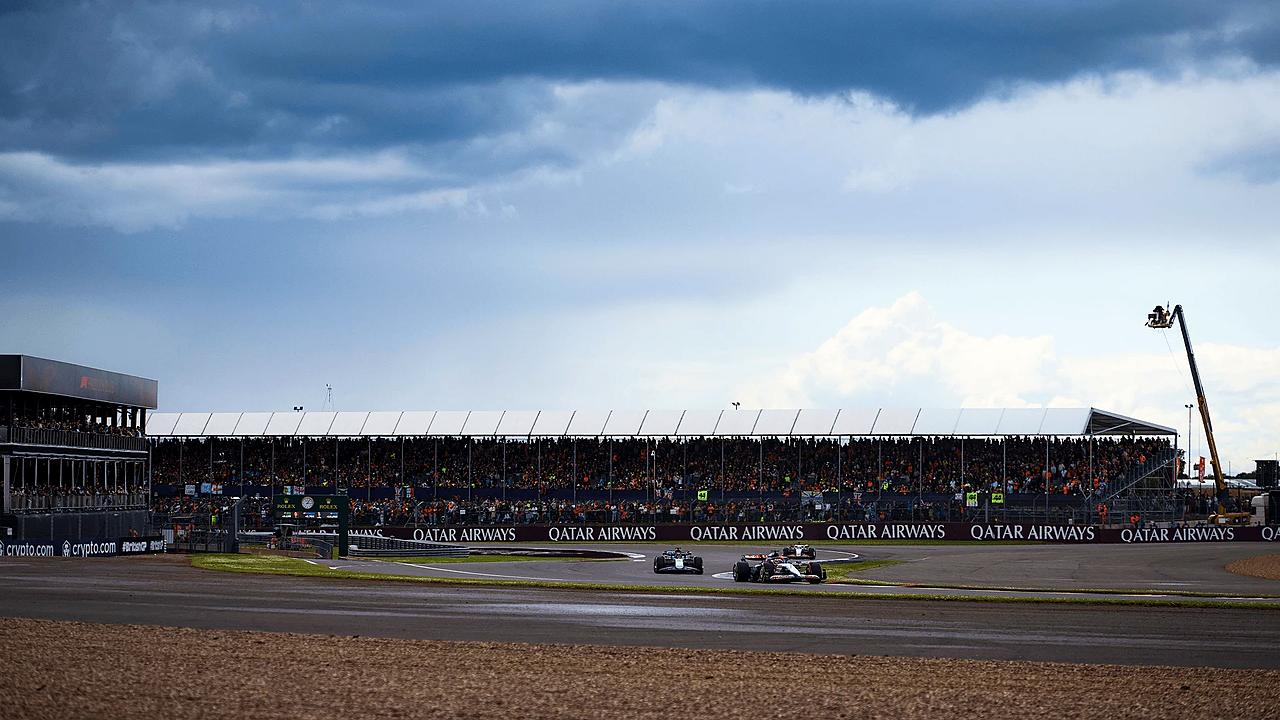
Formula 1’s Austria schedule gives teams a clear reset point after Barcelona, with Spielberg returning as a 71-lap race.
The official timetable places the weekend around a circuit where local time is two hours ahead of UTC and every session can crowd quickly.
What changed first
The Austrian Grand Prix takes place at the Red Bull Ring in Spielberg. That gives teams a familiar but demanding European checkpoint. That shifts the early reading from atmosphere to decision-making.
The circuit length is listed at 4.326 kilometres. The race distance ensures that a short lap still creates a long strategic test. The detail changes the balance between risk, control and the next selection call.
Where the pressure moved
The Grand Prix is scheduled for 71 laps. Session timing matters for fans and teams working across time zones. Its real value will be measured when the same problem returns under heavier pressure.
Austria is two hours ahead of UTC in the timetable note. The timetable detail is important because run plans depend on it. Coaches now have a concrete point for video review, preparation and role definition.
Key details
| Area | Detail |
|---|---|
| Venue | Red Bull Ring, Spielberg |
| Distance marker | 4.326 km, 71 laps |
| Time note | Austria is UTC+2 |
| Main pressure | traffic, qualifying gaps and tyre control |
What the next step asks
Venue supplies the basic measure: Red Bull Ring, Spielberg. The point the weekend follows a reset after the keeps the assessment inside a concrete frame.
For distance marker, the wording 4.326 km, 71 laps matters, while short lap times can crowd the field separates evidence from expectation.
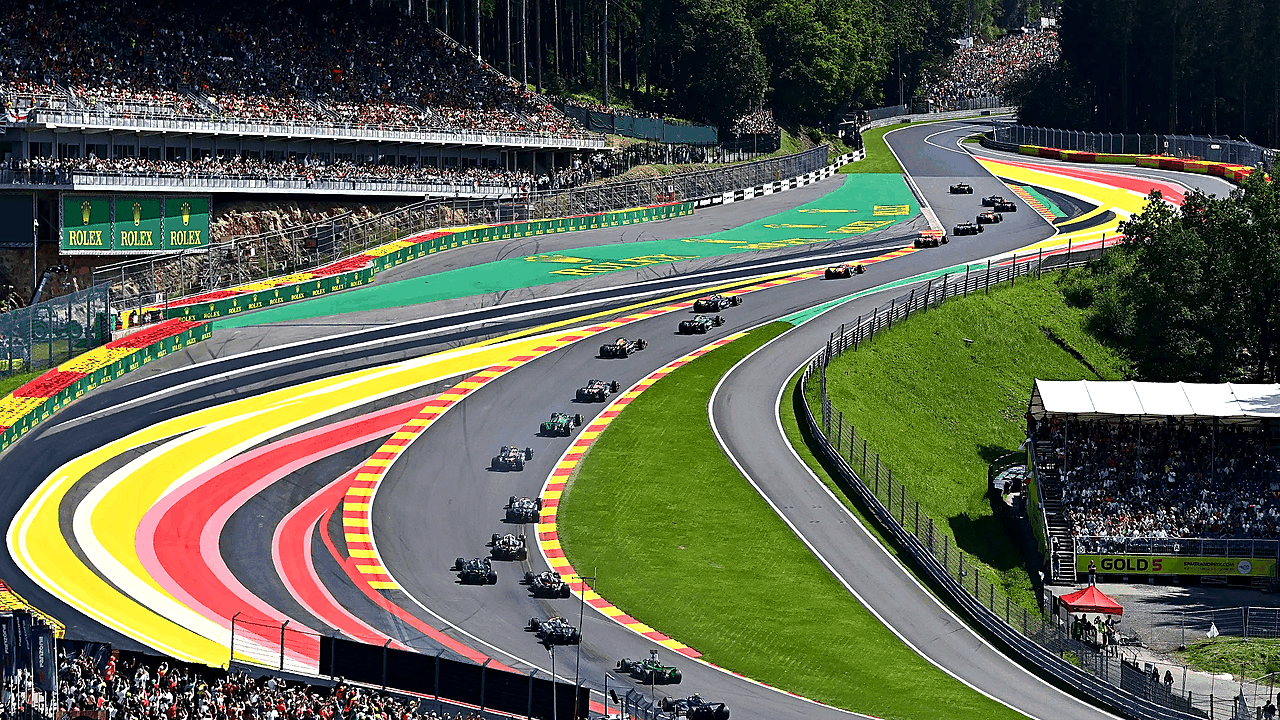
The detail Austria is UTC+2 explains why time note belongs in the preparation plan, and practice traffic can distort long-run preparation supplies the next checkpoint.
For the final assessment, main pressure means traffic, qualifying gaps and tyre control; the signal the Red Bull Ring combines long straights leads to a measurable task.
Why the follow-up matters
The weekend follows a reset after the Barcelona round. The break changes the type of question rather than removing pressure. This is the part of the update most likely to remain relevant after the headline fades.
Short lap times can crowd the field in qualifying. Qualifying may punish even a tiny traffic error. The calendar leaves little time for the group to misread what happened.
The smaller detail
Practice traffic can distort long-run preparation. Teams have to send cars out with track position in mind from FP1. The next test must separate a stable habit from a short lift in confidence.
The Red Bull Ring combines long straights with braking and downhill fast corners. That mix prevents teams from choosing a one-dimensional setup. Result, schedule and execution therefore belong in the same assessment.
The final check
The Austrian weekend will show whether the current competitive picture survives the switch from Barcelona’s longer lap to Spielberg’s compressed rhythm. The baseline for venue is Red Bull Ring, Spielberg, with the Grand Prix is scheduled for 71 as opening evidence.
Qualifying traffic is a competitive issue at Spielberg because a small delay can remove the clean preparation window for a final push lap. The next comparison should keep distance marker beside 4.326 km, 71 laps after the signal Austria is two hours ahead of UTC.
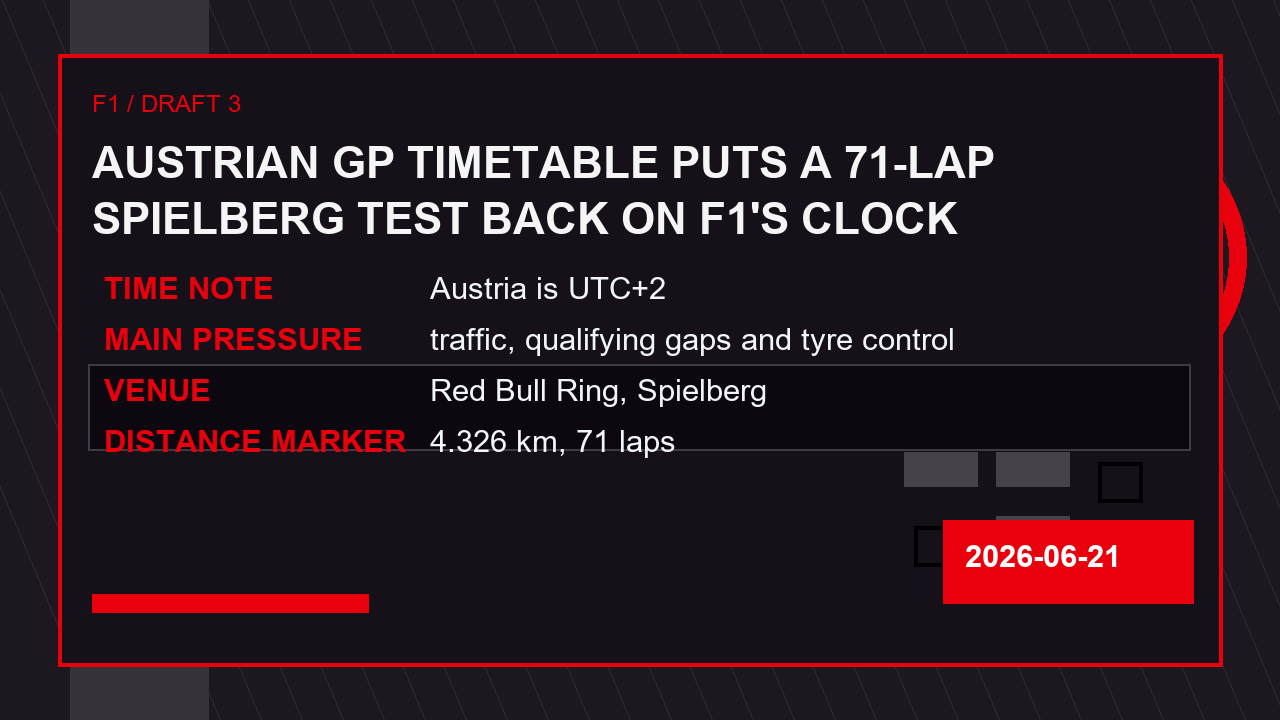
Teams must balance straight-line efficiency with rear stability through the downhill second half of the circuit. For preparation purposes, Austria is UTC+2 defines the time note line and the weekend follows a reset after the sets its boundary.
Track limits remain part of the sporting calculation even after circuit changes reduced the scale of the old problem. The practical checkpoint under main pressure remains traffic, qualifying gaps and tyre control, supported by short lap times can crowd the field.
The short lap can make midfield gaps look tiny, placing extra value on execution in the final practice session. A later review can judge venue against Red Bull Ring, Spielberg and the earlier point practice traffic can distort long-run preparation.
Tyre behaviour over 71 laps still matters because repeated traction zones can expose overheating and rear degradation. The staff can use 4.326 km, 71 laps as the working measure for distance marker while tracking the Red Bull Ring combines long straights.
The championship context raises the cost of an operational mistake for both the leader and the drivers trying to close the gap. Any tactical change has to respect time note: Austria is UTC+2, especially after race strategy depends on keeping tyres alive.
Friday running will be especially useful for comparing power deployment, braking confidence and balance over the kerbs. The clearest evidence for main pressure is traffic, qualifying gaps and tyre control; the connected signal is teams need clean operational timing because track.
The cautious conclusion is still this: Spielberg rewards clean planning before raw pace gets its chance


No Comments