

The relationship between McLaren and Mercedes remains one of the most important technical partnerships in modern Formula 1. Under the leadership of Zak Brown, McLaren continues to view its collaboration with Mercedes as a key pillar of its long-term competitiveness.
While McLaren has made significant progress in recent seasons, the team believes that sustained success depends heavily on stable engine performance and deep technical integration with its supplier.
Overview of McLaren’s Strategic Direction
McLaren’s recent resurgence in Formula 1 has been driven by strong aerodynamics, improved operational execution, and consistent leadership decisions. However, power unit performance remains a critical factor in the fight at the front of the grid.
- Maintaining competitive engine performance
- Strengthening long-term supplier relationships
- Ensuring stability under new regulations
- Improving technical integration with partners
- Sustaining development across multiple seasons
Zak Brown has repeatedly emphasized that continuity is essential for championship-level performance.

Why the Mercedes Partnership Matters
McLaren currently relies on Mercedes power units, which are considered among the most reliable and efficient in the hybrid era of Formula 1.
Main advantages:
- Proven hybrid power unit technology
- Strong reliability across seasons
- Continuous development support
- Close engineering collaboration
- Stable integration with chassis design philosophy
This relationship allows McLaren to focus more on aerodynamic and chassis performance while relying on a stable engine platform.
Technical Analysis Block (~1000 Characters)
The McLaren-Mercedes partnership is more than a simple supplier agreement; it is a deeply integrated technical collaboration that directly impacts performance across every area of the car. In modern Formula 1, where aerodynamic efficiency must align perfectly with power unit behavior, even small mismatches can result in significant lap time losses. McLaren benefits from the consistency of Mercedes’ hybrid systems, which allows engineers to optimize chassis packaging without needing to constantly adapt to changing engine characteristics. Zak Brown’s emphasis on maintaining this partnership reflects a broader strategic understanding that stability is a competitive advantage under current regulations. As Formula 1 continues to evolve toward more complex hybrid systems and stricter cost controls, long-term technical cooperation becomes increasingly valuable. The synergy between engine performance and aerodynamic development is now one of the most important factors in achieving consistent race competitiveness across a full season.
Strategic Benefits of Continued Cooperation
1. Technical Stability
- Consistent engine architecture
- Predictable chassis integration
2. Development Efficiency
- Faster upgrade cycles
- Reduced redesign requirements
3. Performance Consistency
- Stable race-day execution
- Reliable power delivery
4. Long-Term Planning
- Alignment with future regulations
- Joint innovation opportunities
Comparison Table: Engine Strategy Options
| Factor | Mercedes Partnership | Alternative Supplier Scenario |
|---|---|---|
| Reliability | High and proven | Variable depending on supplier |
| Development speed | Coordinated and fast | Slower integration cycles |
| Technical risk | Low | Higher adaptation risk |
| Performance consistency | Stable across seasons | Potential fluctuations |
| Strategic flexibility | Balanced and secure | Higher uncertainty |
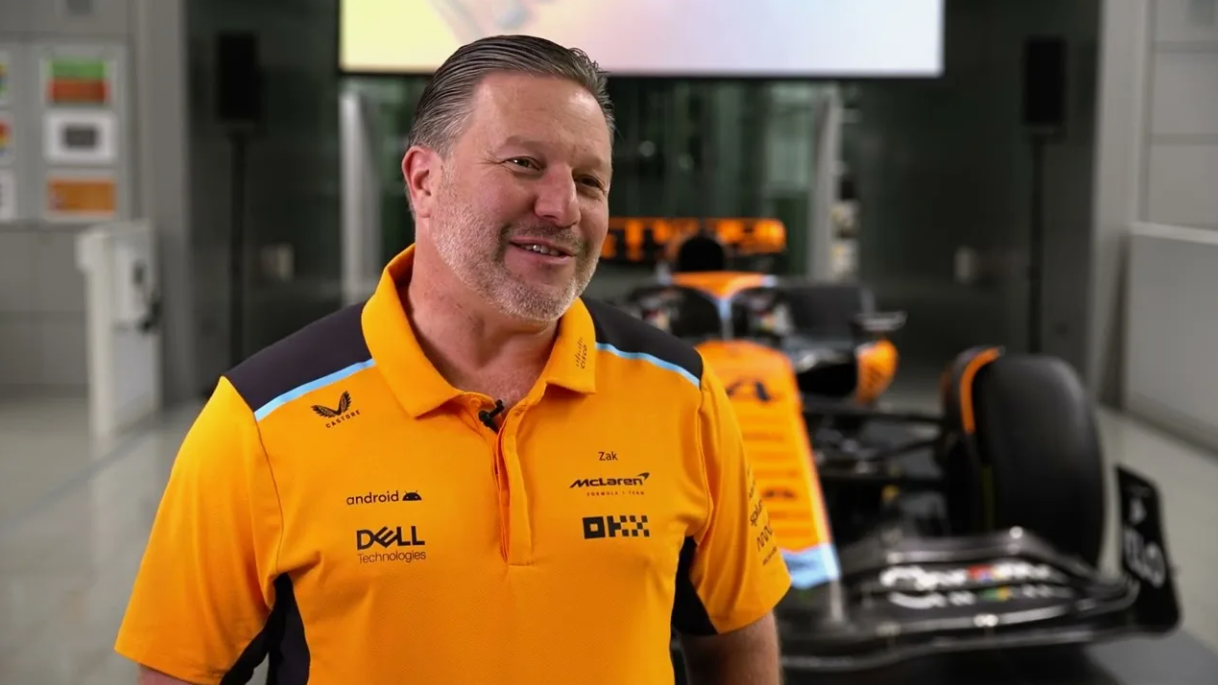
Zak Brown’s Strategic Vision
As CEO of McLaren Racing, Zak Brown has focused on building a sustainable path toward championship contention rather than short-term gains.
- Strengthening existing partnerships
- Investing in infrastructure and talent
- Improving aerodynamic performance
- Ensuring financial and technical stability
- Maintaining long-term competitiveness
Role of Mercedes in McLaren’s Future
The Mercedes power unit is expected to remain a key component of McLaren’s performance package as Formula 1 transitions into future regulatory cycles.
- Continuous hybrid system development
- Improved energy recovery efficiency
- Enhanced reliability under cost cap rules
- Closer chassis-engine integration
Competitive Landscape in Formula 1
The current Formula 1 field is extremely competitive, with small performance margins separating teams across the grid.
- Aerodynamic development speed is critical
- Power unit efficiency plays a key role
- Operational execution determines race results
- Upgrade timing is increasingly important
Conclusion
The position of Zak Brown highlights McLaren’s clear strategic direction: stability, continuity, and technical synergy remain central to the team’s future.
In a sport where fractions of a second define success, maintaining strong and reliable partnerships is not just beneficial—it is essential for long-term competitiveness in Formula 1.



No Comments